Man uses Meta Quest VR headset to help spray paint a mural and it works in the most incredible way

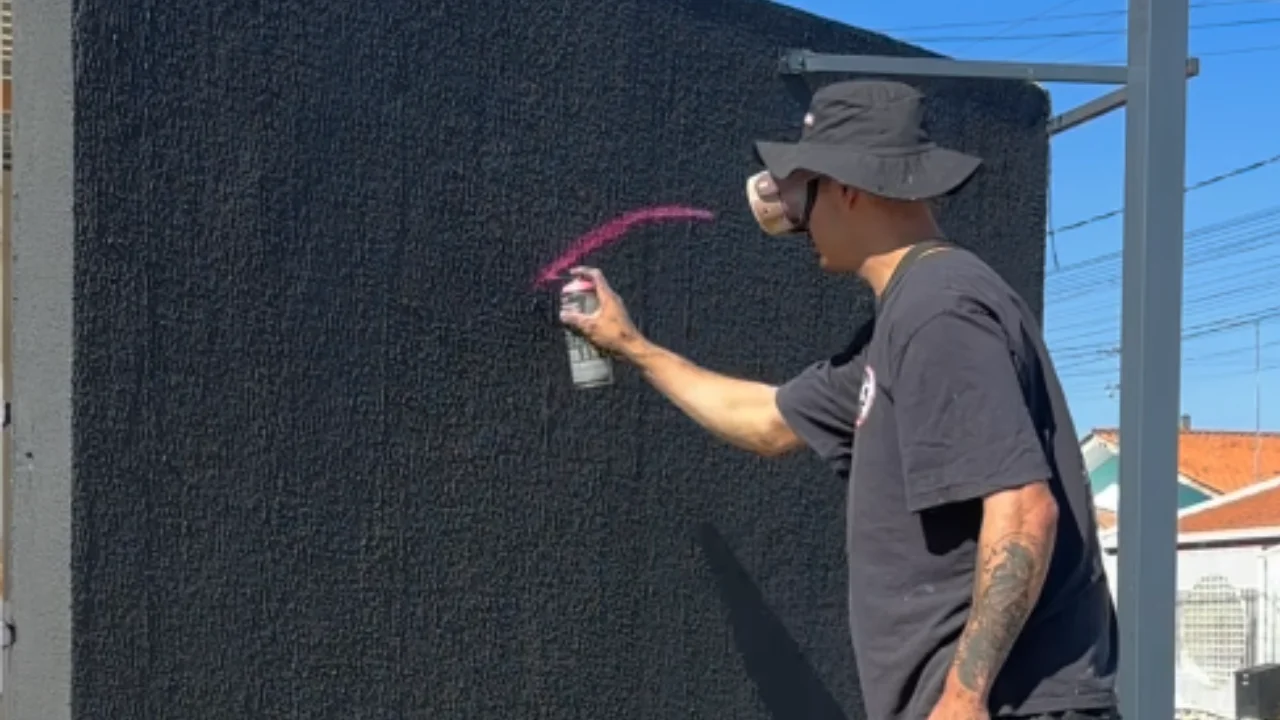

What if you could paint a giant, perfectly scaled painted mural without drawing a single grid on the wall, just wearing a Meta Quest VR headset?
That’s exactly what Brazilian artist Junior Grafite appeared to do, using a Meta Quest 3S headset to turn a blank wall into a virtual canvas.
Through the headset, he could see a full BMW M3 GTR digitally overlaid onto the surface in front of him.
He then followed the virtual lines with his spray can, and the result was seriously impressive, but he didn’t just stick to the BMW M3 GTR.
The Meta Quest headset turns a blank wall into a BMW M3 GTR
Muralists have been using grids to scale drawings for centuries, carefully dividing an image into sections before transferring it onto a much larger surface, and it’s a tried-and-tested method, but it can also be incredibly time-consuming.
Grafite’s approach essentially replaces that whole process with futuristic augmented reality.
While everyone watching sees a mostly blank wall, the artist wearing the Meta Quest 3S can see the mural (in this case, a BMW M3 GTR) positioned directly in front of him.
The digital image acts like a giant virtual stencil, giving him the lines and proportions he needs to follow and all he has to do is pick up his spray can and start painting.
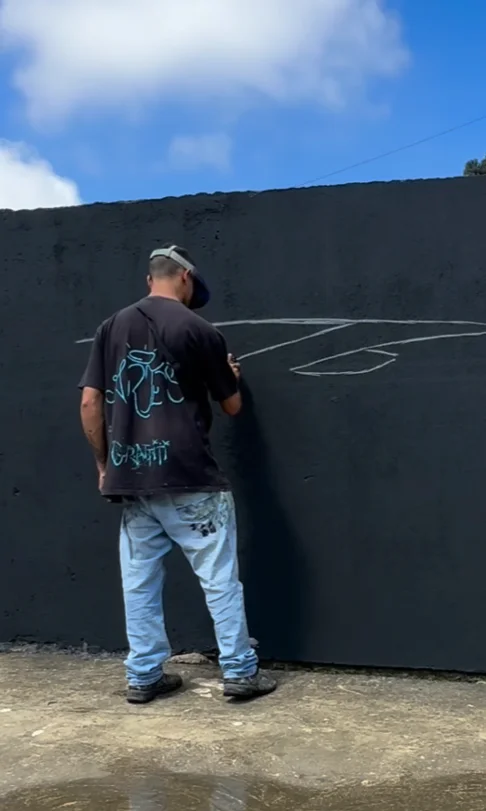
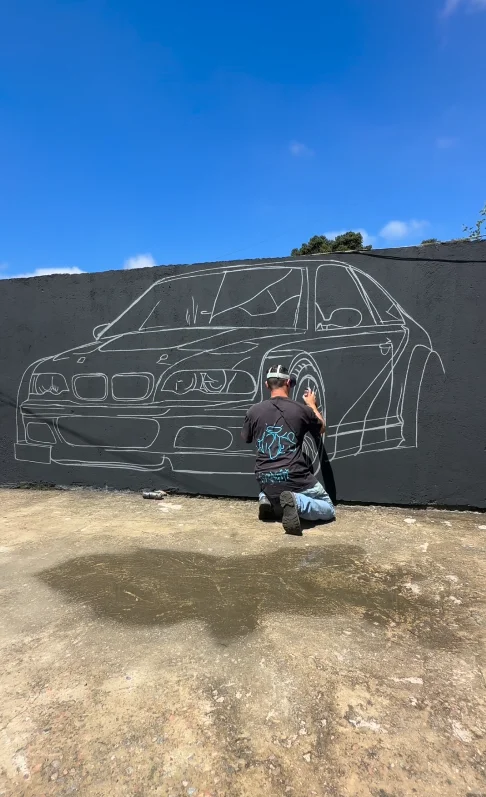
As he moves around the wall, the virtual BMW remains positioned over the surface, allowing him to use it as a guide while creating the real artwork.
It makes for a pretty surreal sight because the artist appears to be spraying paint onto an invisible image.
Meta’s Quest headsets use passthrough technology to let users see their surroundings while digital content is placed over the real world.
The platform is called sketchar.io and can also use spatial anchors to keep virtual objects positioned relative to the physical environment, which is what makes a project like this possible.
Basically, Junior has turned a VR headset into an incredibly high-tech version of a traditional artist’s grid.
How VR could change street art
The BMW M3 might be one of the coolest examples, but it’s far from the only thing Grafite can create with his spray can.
His work stretches across all kinds of subjects, including incredibly detailed portraits of people, colorful butterflies, pop culture icons and plenty of other cars.
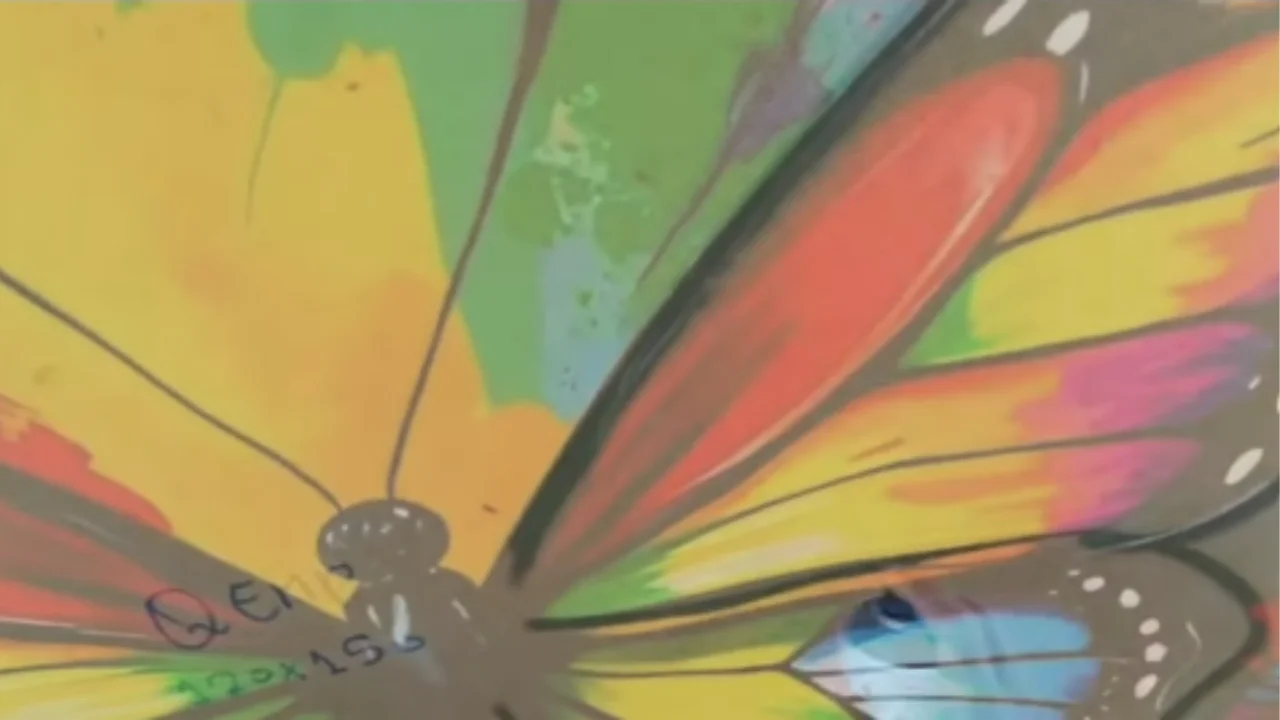
So the headset isn’t simply a clever trick for recreating one particular BMW – it gives him a whole new way to approach his art.
The virtual overlay gives him a guide to follow, while the actual artwork still depends on his skill with the spray can.
That’s what makes his use of the Meta Quest so interesting.
It’s less about replacing traditional street-art techniques and more about giving an experienced artist another tool to work with.
Instead of spending hours measuring, drawing, and correcting a design before the painting even begins, he can use technology to get the basic proportions and positioning right, then concentrate on the part that really matters – turning it into art.
The VR headset might have started out as a way to escape into digital worlds, but Grafite is using it to bring those digital worlds straight into the real one.