NASA scientists got the luckiest accidental discovery after Hubble captured a comet splitting apart in our solar system
 Claire Reid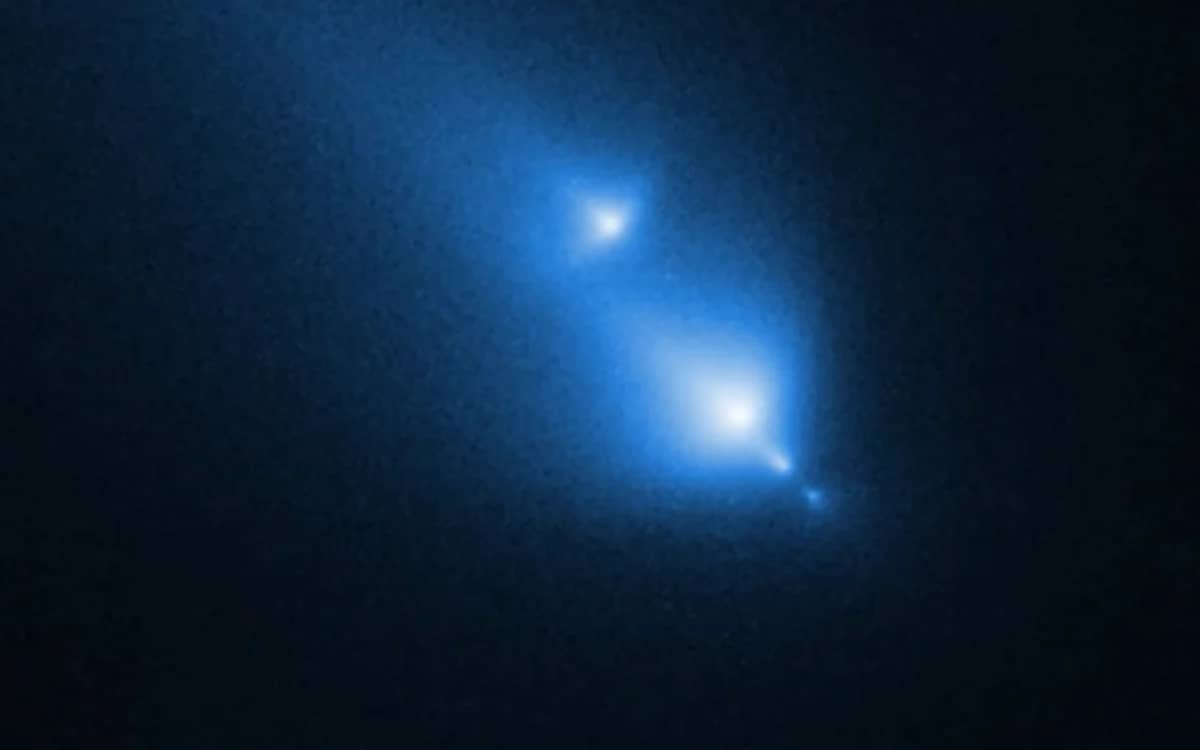
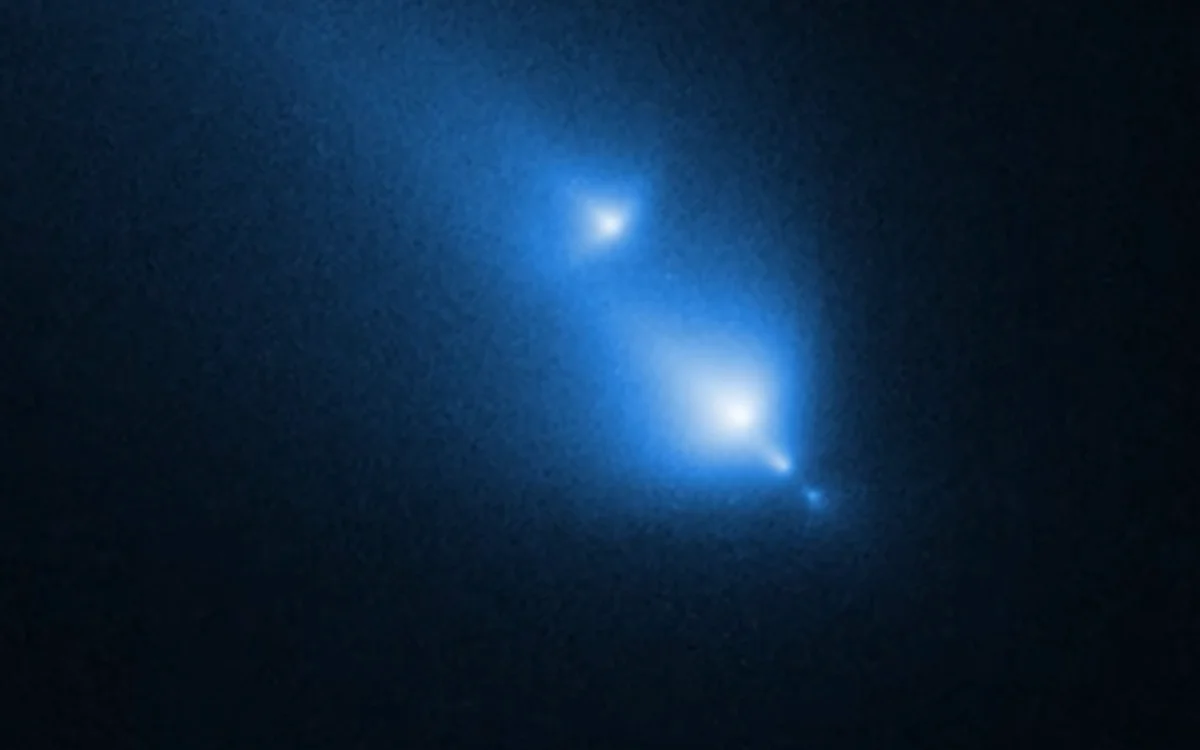

Luck was on the side of NASA astronomers when they managed to capture the moment a comet began breaking apart with the Hubble Space Telescope.
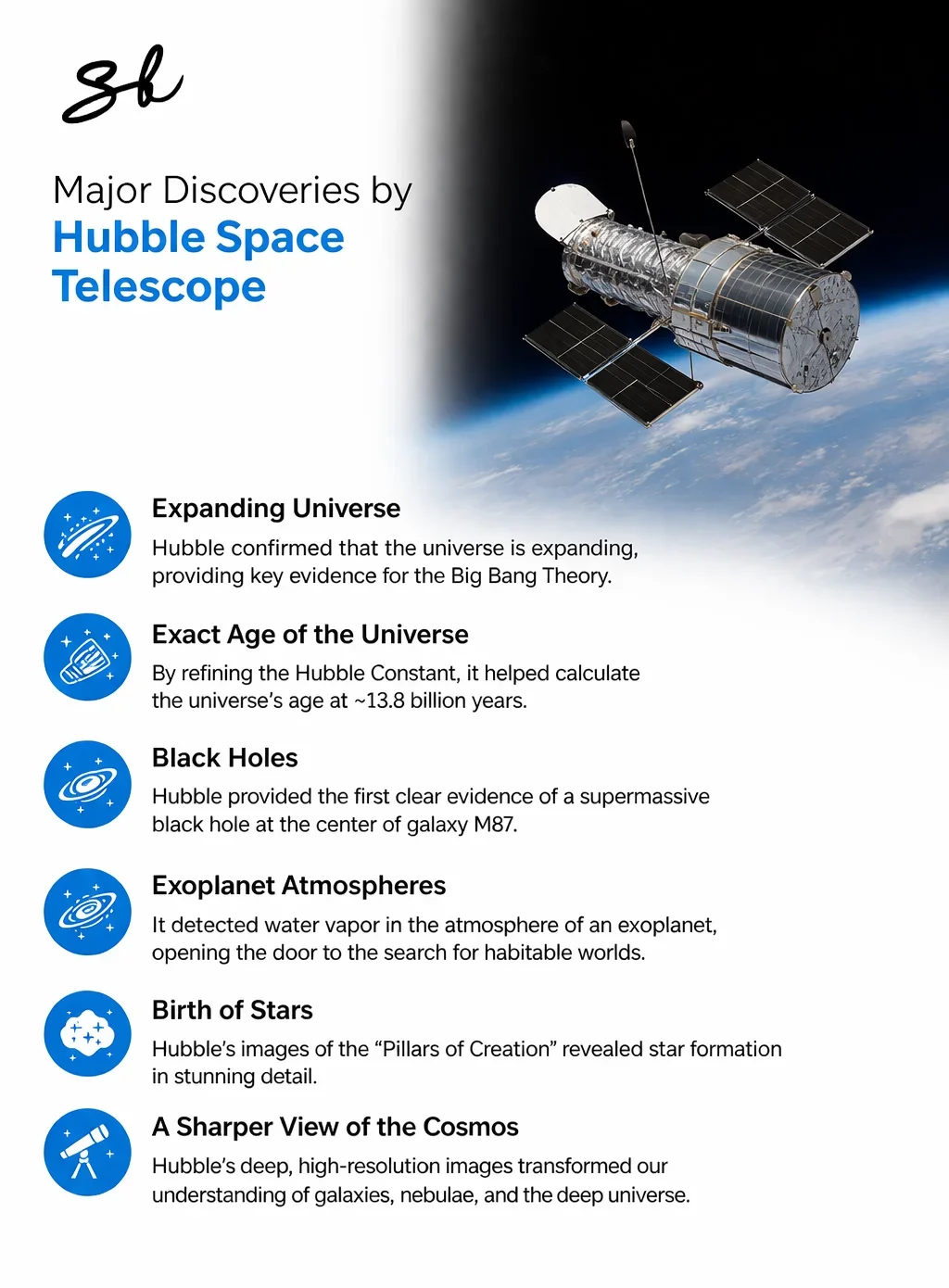
The Hubble Space Telescope blasted into low Earth orbit in 1990 and is still operational today.
Over the decades, Hubble has captured some of the most detailed images of deep space and has paved the way for remarkable scientific discoveries, it was used to help debunk a bizarre rumor about aliens.
And its work is clearly not over yet, with the space telescope recently capturing a comet as it began to break down.
Enter our competition to win a stunning 2006 Ford GT or $400,000 cash!
The Hubble Space Telescope accidentally caught an extraordinary event
Researchers had long hoped to catch a comet breaking up, but as these sorts of things don’t run to a strict schedule, it’s not an easy thing to achieve.
However, a team of NASA scientists was able to observe that exact phenomenon thanks to the Hubble Space Telescope and a large pinch of luck.
The team had originally planned to observe another comet, but that turned out to be ‘not viewable’, so they had to find another comet instead.
This second comet turned out to be C/2025 K1 (ATLAS), also known by the slightly catchier name K1.
And, as luck would have it, as soon as they began observing this second-choice comet, the team noticed that it had started to break down, giving them the chance to see something truly special.
“Sometimes the best science happens by accident,” research professor in the Department of Physics at Auburn University, John Noonan, said.
He said the odds of them observing as it happened to break apart were the ‘slimmest of slim chances’.

A NASA astronomer said Hubble had ‘never before’ caught something like this
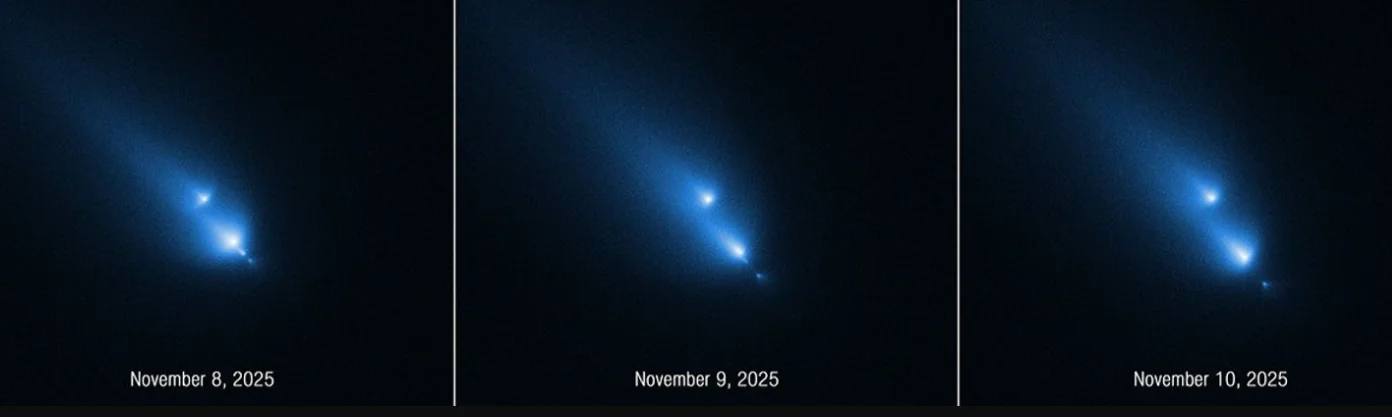
The comet was observed between November 8 and November 10, 2025, managing to capture it just as it began to unravel.
The researchers said the K1 split into at least four pieces.
Each of these pieces had its own distinct coma, the name given to the cloud of dust and gas that surrounds a comet’s icy nucleus.
“Never before has Hubble caught a fragmenting comet this close to when it actually fell apart. Most of the time, it’s a few weeks to a month later. And in this case, we were able to see it just days after,” said Noonan.
“This is telling us something very important about the physics of what’s happening at the comet’s surface. We may be seeing the timescale it takes to form a substantial dust layer that can then be ejected by the gas.”
DISCOVER SBX CARS: The global premium car auction platform powered by Supercar Blondie
Follow topics and authors from this story to see more like this in your personalised homepage feed and to receive email updates.