NASA rover stuns scientists with Mars discovery that could reshape what we know about life there

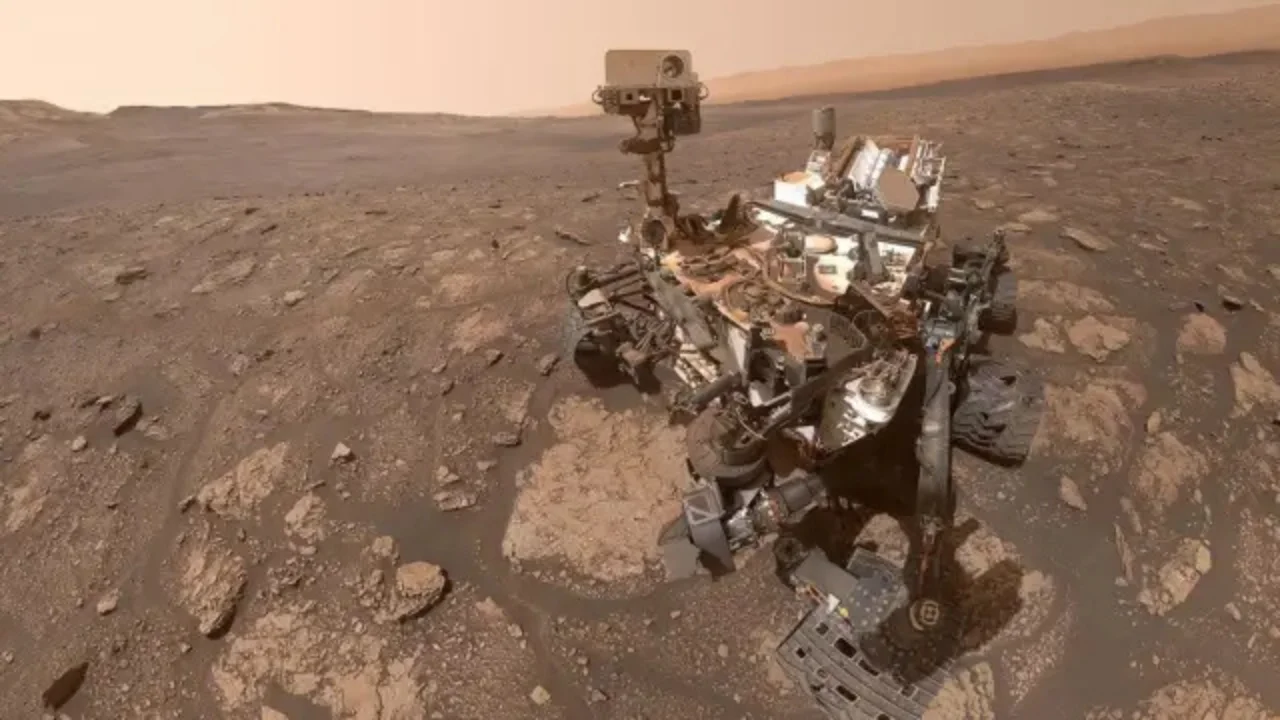

Everyone’s favorite NASA rover, Curiosity, has just delivered one of its most jaw-dropping discoveries yet, and scientists are genuinely excited about what it could mean for Mars.
The car-sized robot, which has been exploring Mars for over a decade, drilled into a rock that’s now rewriting what we thought we knew about the Red Planet.
Researchers say the findings could point to conditions that once supported life.
And while it’s not definitive proof of aliens, it’s about as close as we’ve ever come to answering David Bowie’s timeless question: Is there life on Mars?
NASA rover’s new discovery
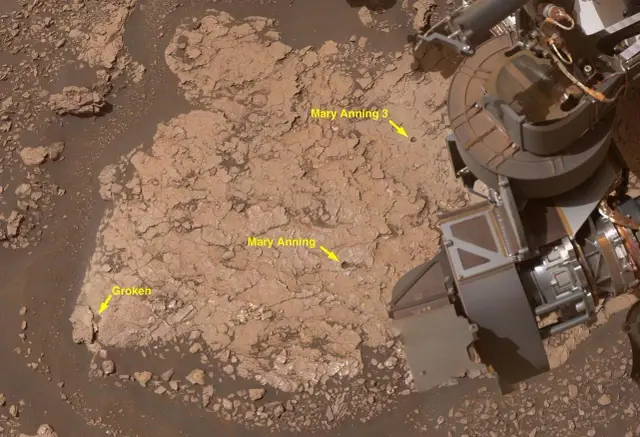
The newest space discovery centers around a rock sample found back in 2020 in an area nicknamed ‘Mary Anning’, inside Gale Crater.
After years of analysis, scientists revealed it contains the most diverse collection of organic molecules ever detected on Mars.
We’re talking 21 different carbon-based compounds, including seven never seen on the planet before.
These molecules are especially exciting because carbon is a key ingredient for life as we know it.
Even more intriguing, some of these compounds resemble the chemical building blocks linked to life on Earth, including nitrogen and sulfur-containing molecules.

Is there life on Mars?
Before you get too excited, scientists are being careful not to jump to conclusions.
These organic molecules don’t prove life existed on Mars, but they do show that the planet once had the right chemistry to support it.
The rock itself is believed to be around 3.5 billion years old, dating back to a time when Mars likely had water, lakes, and a much thicker atmosphere – a tiny bit like Earth.
What makes this even more mind-blowing is how well these molecules have survived.
Despite Mars being bombarded by radiation for billions of years, the compounds were preserved inside clay-rich rocks, acting like a natural time capsule.
Scientists say the next big step is getting samples back to Earth, where they can be studied in far more detail, and only then will we know if these molecules were created by geological processes… or something far more exciting.