A UK university just gave students their own humanoid robot and the implications for AI development are significant
 Claire Reid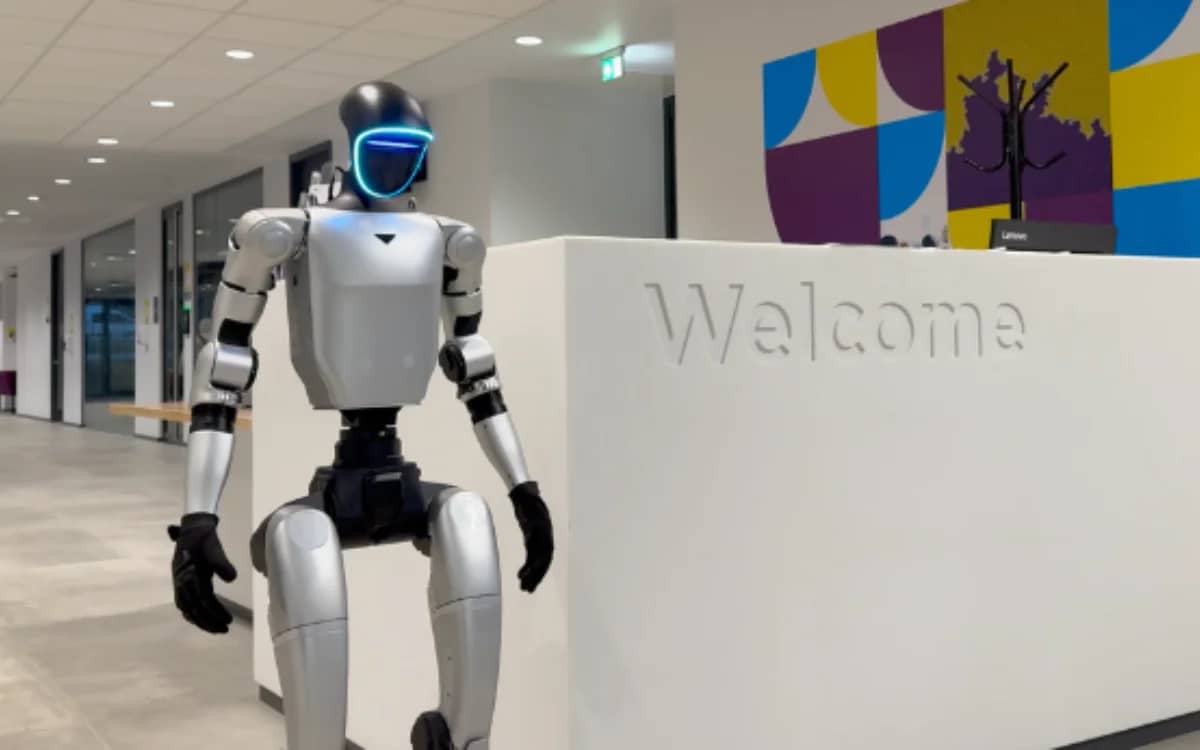

The computer science department at Durham University, in the UK, has welcomed a humanoid robot called Alan to the team and says it will help support ‘cutting-edge research’.
Once the stuff of science fiction, humanoid robots have become a reality in recent years.
At this year’s CES, bots were seen doing everything from folding laundry to snapping selfies, while Tesla put its Optimus robots to work at both its plants and its diner in LA.
And over at Durham University, the Department of Computer Science has recently introduced a Unitree G1 Edu humanoid called Alan.
Say ‘hello’ to Alan, a Unitree G1 Edu humanoid robot
The super-smart AI bot is designed for both education and research purposes, with the university explaining it will be able to support a ‘wide range of future research’.
The cute-looking bot will be primarily used within the computer science department by members of the Vision, Imaging, and Visualization in Durham (VIViD) team.
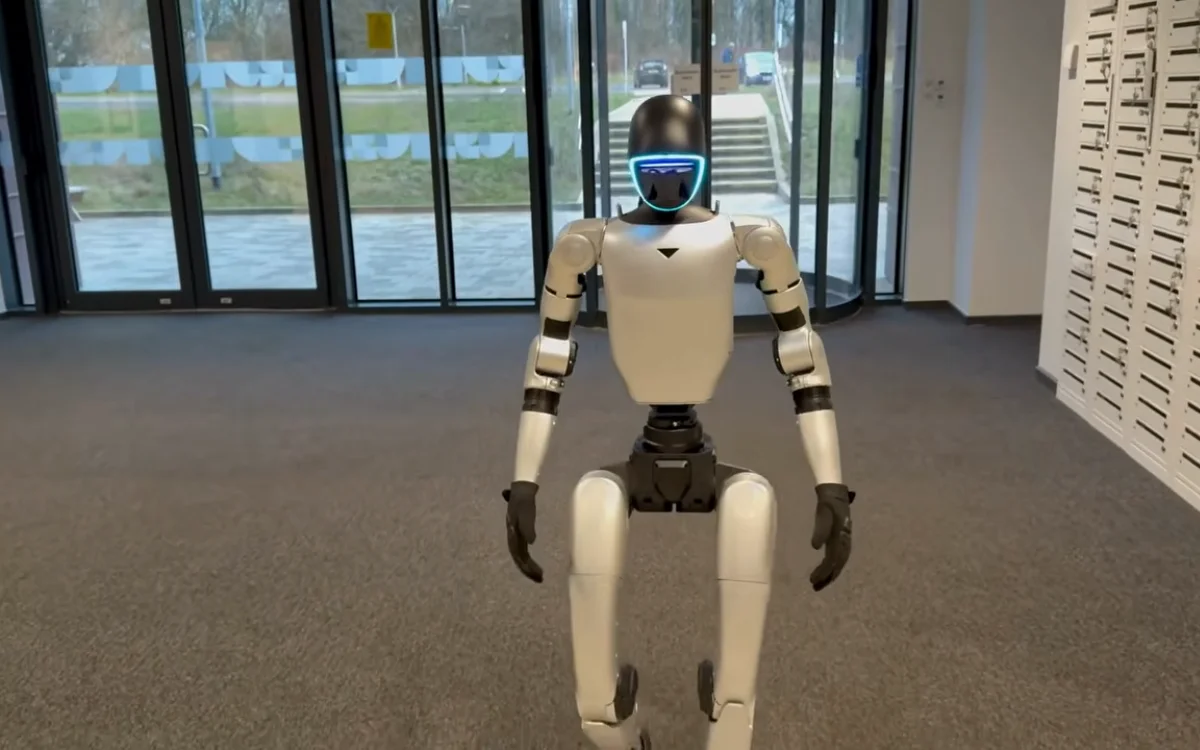
Assistant Professor and part of the VIViD team, Dr. Amir Atapour-Abarghouei, told Supercar Blondie that Alan will be used to further research into ‘full independent autonomy’.
“For me and my team, the main grand challenge is embodied AI and, more specifically, full independent autonomy,” he explained.
“The real question is not just whether a humanoid robot can walk, gesture, or perform a demonstration, but whether it can genuinely perceive the world, understand what is happening around it, and make good decisions in real time in complex and unstructured environments.
“That is a very difficult problem, and solving it properly will require major advances in perception, reasoning, and control.
“A big part of that challenge is efficiency. It is neither practical nor desirable for autonomous robots to depend on large remote server farms every time they need to interpret their surroundings or decide what to do next. That kind of approach does not scale well, and it also comes with a serious environmental cost.”

Instead, the team is hoping to learn about building AI systems for autonomy that are a way more efficient, ‘including approaches inspired by biological brains, such as spiking neural networks, which offer a promising route towards low-power and low-latency intelligence’.
Alan will also be used by the VIViD department to monitor human-robot interaction and how people can build trust in robots.
Alongside all of that, the university said Alan could also pop up at events and demonstrations, and is already garnering a lot of interest from folks in the computer science department, and outside of it.
So basically, he’s going to be a hard-working bot.
Robots at universities could become more common in the not-too-distant future
As we saw at CES, robots are becoming more and more useful, but aside from washing dishes and folding your laundry, they also make great research platforms.
So, could robots like Alan become a common feature in university common rooms in the near future? Well, Dr. Amir seems to think so.
“I do think humanoid robots like Alan will become much more common across UK universities, particularly in places with strong interests in robotics, human-robot interaction, assistive technologies, and social robotics,” he said.
“They are becoming increasingly useful as research platforms because they bring together perception, mobility, manipulation, and interaction in a single system.
“I do not think every department will suddenly have one, but I do think they will increasingly become part of the normal research infrastructure in universities that want to play a serious role in the next generation of AI and robotics, especially as hardware costs continue to go down.”
The Unitree G1 robot is an impressive little guy
The Unitree G1 is an impressive bit of tech.
The next-generation bots are able to carry out a huge range of tasks and are more flexible than a human, with 43 degrees of joint freedom.
The bot ‘sees’ the world around it thanks to a depth camera and 3D LiDAR, and has a battery life of around two hours.
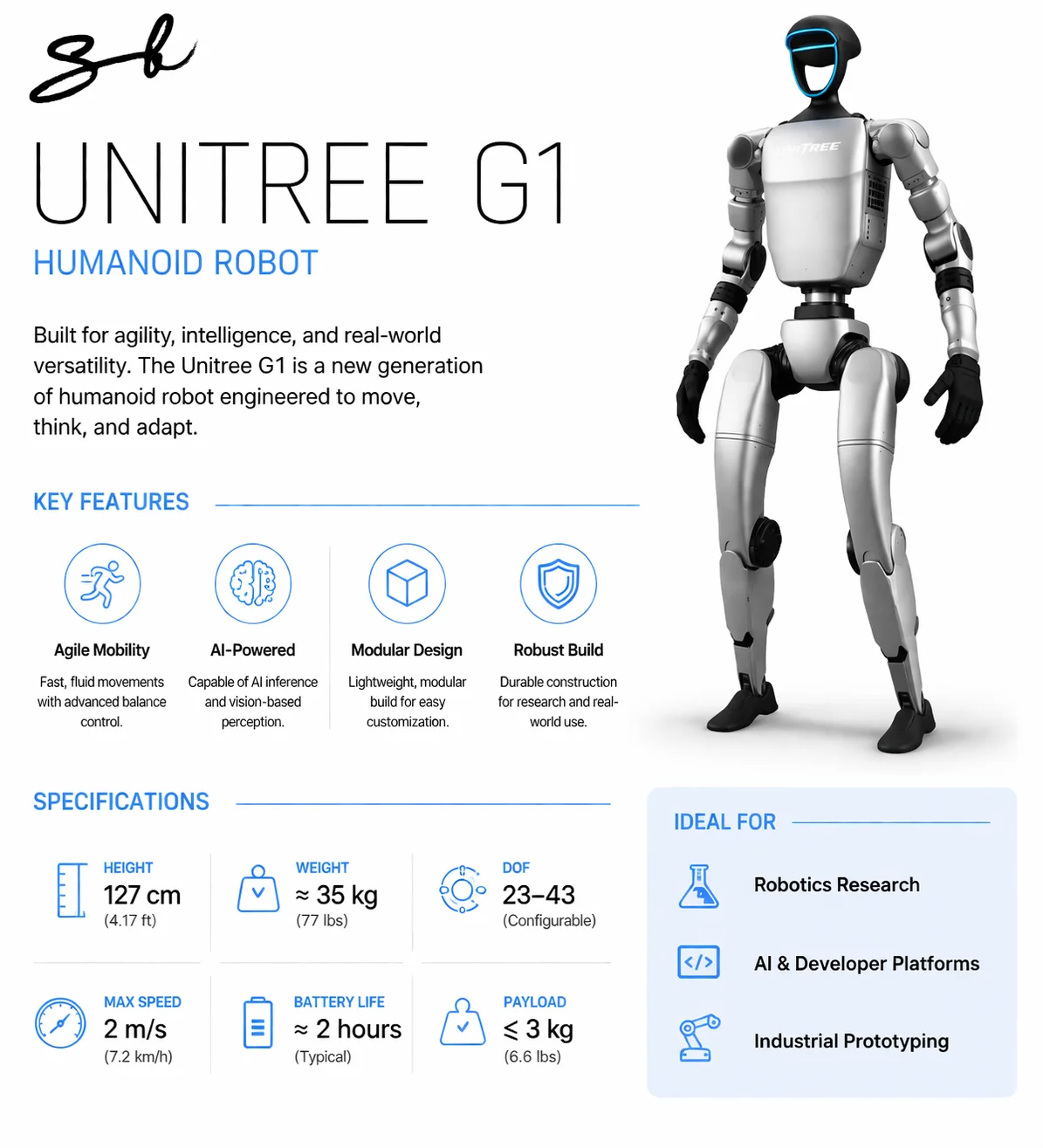
The G1 stands at around 4ft 2in and weighs just 77lbs, but don’t let its diminutive size fool you, the G1 can pack a punch – literally.
Take a look at what happened when Supercar Blondie’s Sergi Galiano stepped into the ring with one.
Fortunately, Alan won’t be scrapping with students or staff members at Durham University, but he could help pave the way for some very interesting scientific study.
DISCOVER SBX CARS: The global premium car auction platform powered by Supercar Blondie