Wikipedia just banned AI-generated content, allowing only two interesting exceptions
 Claire Reid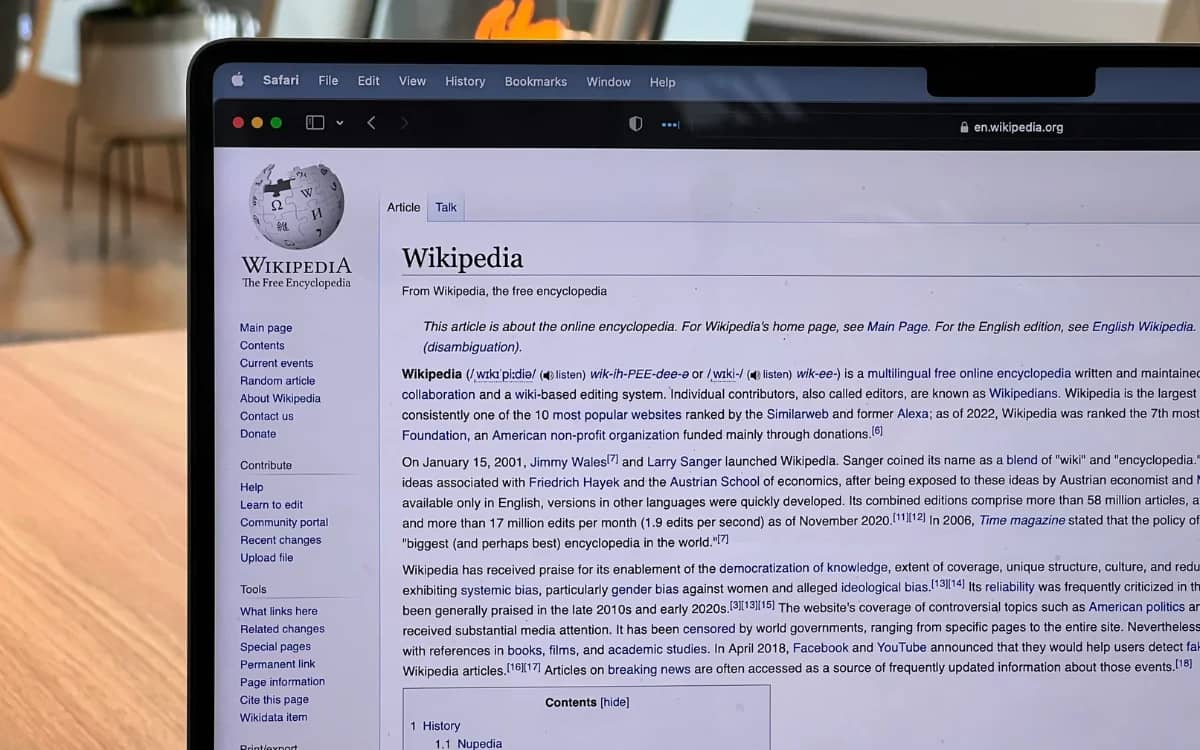
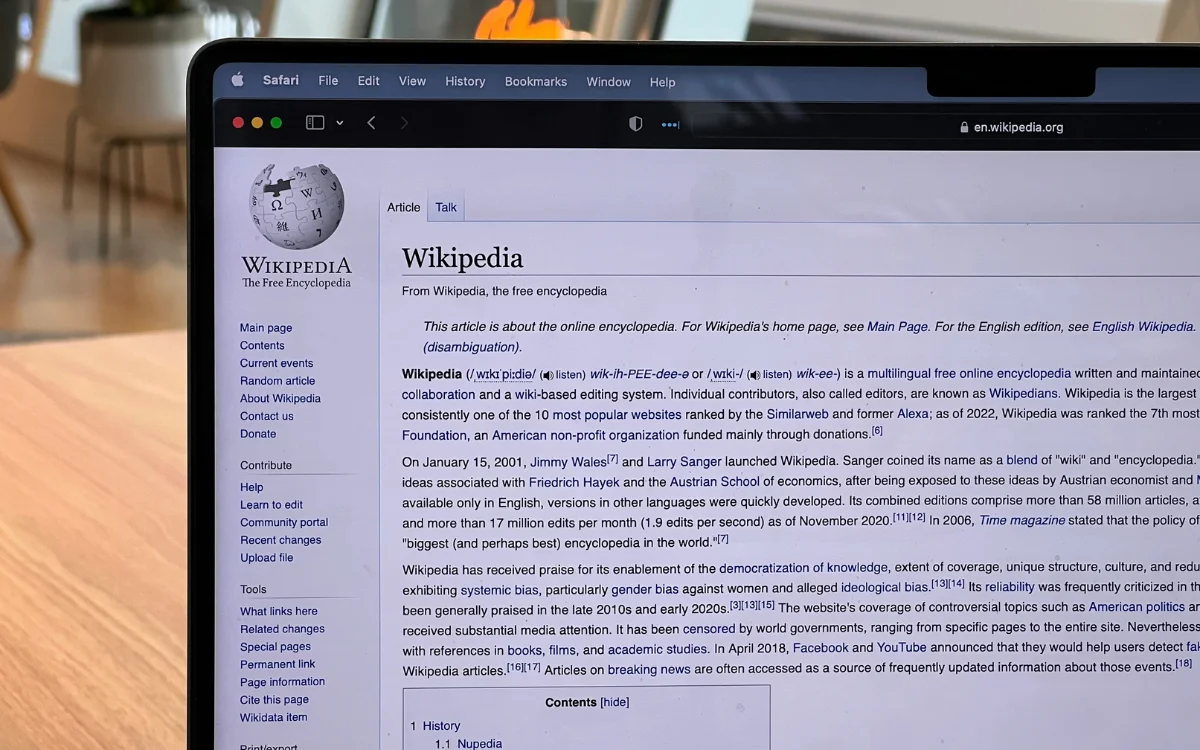

Wikipedia has banned AI-generated content, with just two strict exceptions, after revealing that AI could suffer from model collapse in the future.
Wikipedia has recently celebrated its 25th anniversary, having launched on January 15, 2001, and has become the go-to source to settle just about any argument or answer any question.
However, Wikipedia has recently reported an eight percent decline in human visitors to its page, as more people rely on generative chatbots or AI-powered search results.
But the Wikimedia Foundation has explained that AI is completely reliant on human-documented knowledge resources to survive, and has just brought in new rules banning its editors from using it.
Enter our competition to win a stunning 2006 Ford GT or $400,000 cash!
The Wikimedia Foundation has warned of AI model collapse – here’s what that means
These days, millions of people rely on AI chatbots for everything from helping them figure out why their car is making that odd noise to writing a professional-sounding email.
However, recently, YouTuber Hank Green questioned whether the current AI could ‘totally destroy itself’ due to model collapse.
And it’s something the Wikimedia Foundation says could happen, as AI relies entirely on information that is already out there.
Although it might seem like your AI assistant is ‘thinking’ it’s actually just drawing on the mountains of data it has been trained on.
“Generative AI cannot exist without continually updated human-created knowledge – without it, AI systems will fall into model collapse,” the foundation said in a blog post.
The foundation went on to explain that without continually updated human-written content, generative AI systems will fall into model collapse.
Without new information written by people, AI would have to be trained on other AI content, and studies and experiments have shown that this leads to ‘increasingly inaccurate results’.
“Through experiments on AI models, the team found that models trained on AI-generated data, also known as synthetic data, initially lost information from the tails, or extremes, of the true distribution of data – what they called ‘early model collapse,’ a report from IBM explained.
“In later model iterations, the data distribution converged so much that it looked nearly nothing like the original data – which researchers termed ‘late model collapse’.”
Wikipedia has introduced a new rule banning AI-generated content, with two exceptions
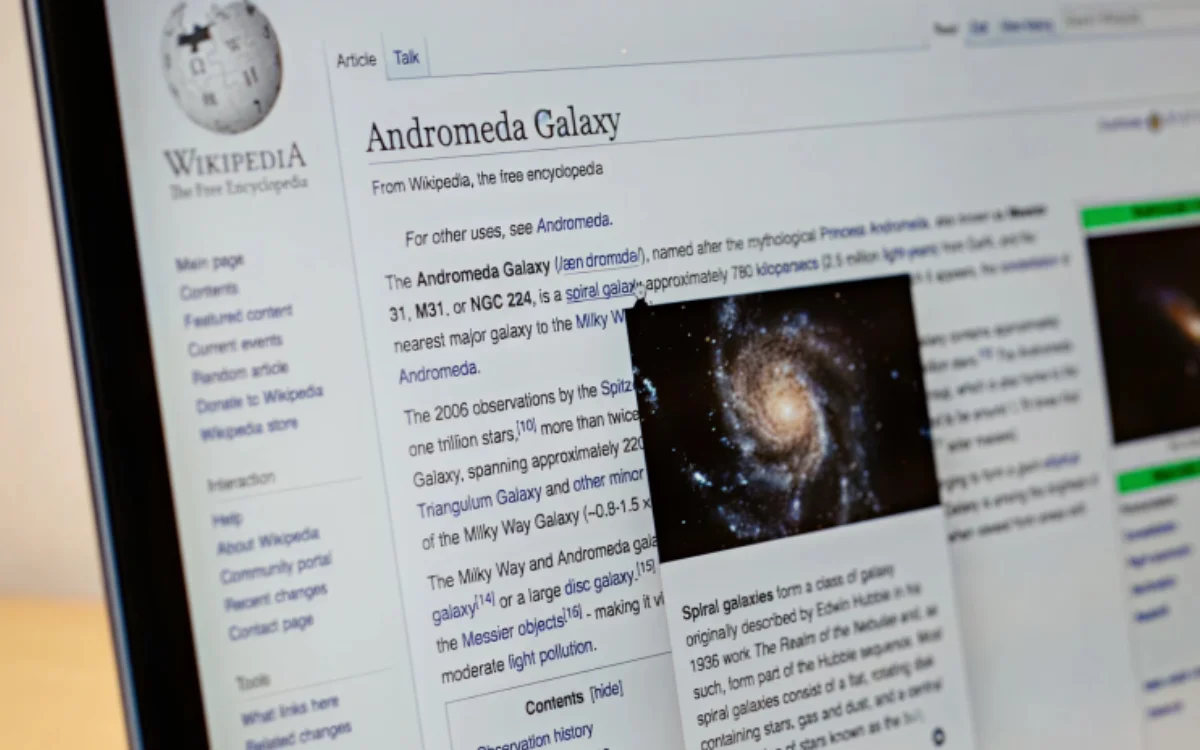
This week, Wikipedia announced it was banning AI-generated content from its site.
“Text generated by large language models (LLMs) often violates several of Wikipedia’s core content policies,” the website states.
“For this reason, the use of LLMs to generate or rewrite article content is prohibited.”
However, it does allow for two exceptions:
Firstly, editors are allowed to use it to make ‘basic copyedits’ to their own writing, and to incorporate some of these after a human has reviewed them, provided the ‘LLM does not introduce content of its own’.
“Caution is required, because LLMs can go beyond what you ask of them and change the meaning of the text such that it is not supported by the sources cited,” the policy states.
And secondly, LLMs can be used to create a first draft translation, but the editor is still required to be fluent in both languages so they can spot errors.
This second rule only applies to the English Wikipedia site when translating text from another language into English.
Timeline of key AI breakthrough moments
1950: British mathematician Alan Turing devises the ‘Imitation Game’, now known as Turing Test, designed to test a machine’s ability to replicate human intelligence and behavior
1956: The term ‘Artificial Intelligence’ is officially coined during a research project at Dartmouth College in the UK
1966: MIT professor Joseph Weizenbaum creates ‘ELIZA’, a rudimentary AI-powered chatbot that mimics human behavior
1997: IBM supercomputer Deep Blue defeats world chess champion, Garry Kasparov
2011: Apple introduces Siri, the first AI-powered assistant integrated directly into a smartphone
2016: An AI bot writes an entire movie, Sunspring, from scratch, including the film’s soundtrack and screenplay
2022: OpenAI launches ChatGPT, the world’s first widely available AI-powered chatbot
DISCOVER SBX CARS: The global premium car auction platform powered by Supercar Blondie
Follow topics and authors from this story to see more like this in your personalised homepage feed and to receive email updates.