This wild $3,000,000,000 NASA nuclear drone is being sent to space to fly around Saturn's largest moon
 Claire Reid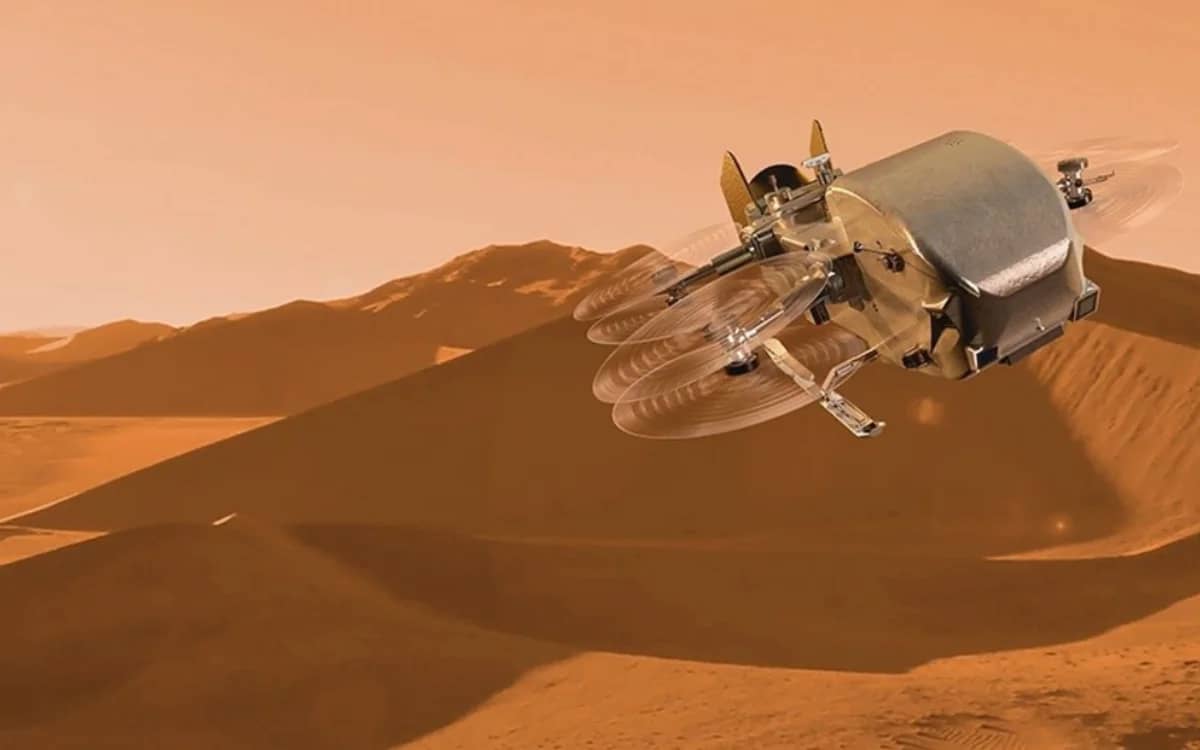
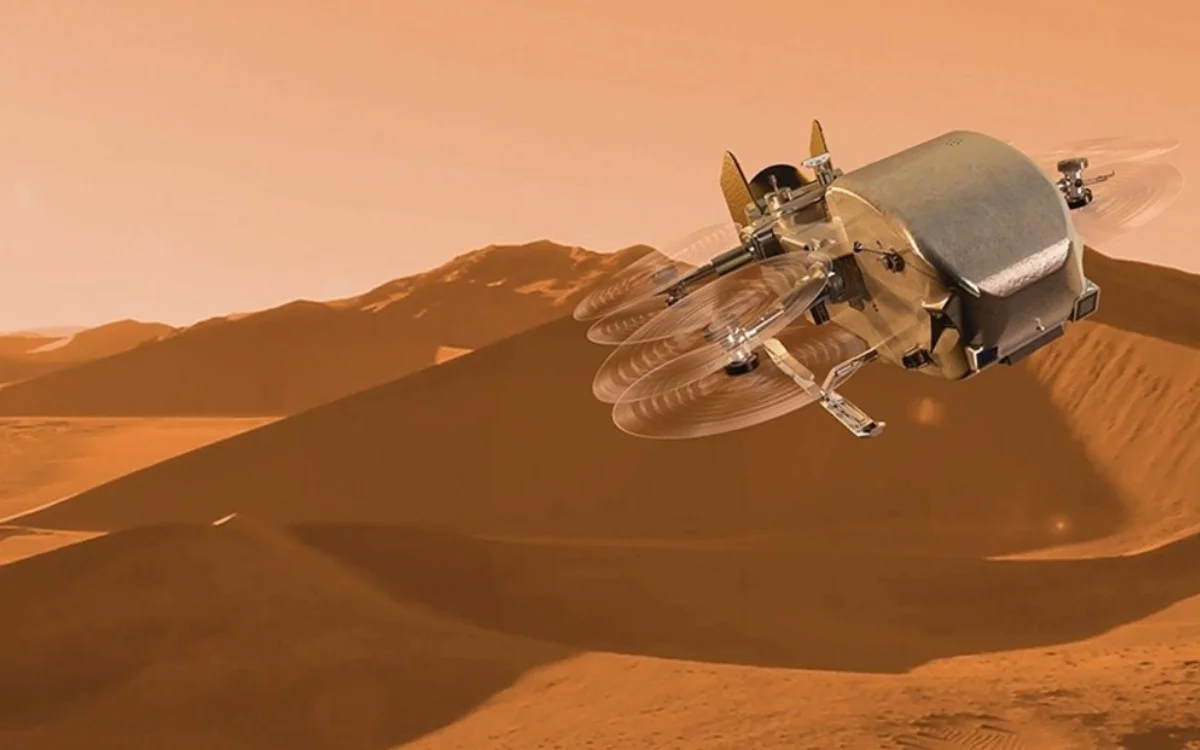

NASA is getting ready to do something it’s never done before – sending a unique drone called Dragonfly to Titan, one of Saturn’s moons.
The US space agency is planning on blasting Dragonfly off to explore Titan on a ‘mission like no other’.
The drone will be tasked with investigating the moon’s habitability on the 3.3-year-long mission.
And NASA’s proposed launch date might be sooner than you’d expect.
Enter our competition to win a stunning 2006 Ford GT or $400,000 cash!
The Dragonfly nuclear-powered drone will ‘break barriers’ for space exploration
The car-sized Dragonfly rotorcraft will ‘break the barriers for exploration of other planetary bodies’, according to NASA
It will be blasted off to Saturn’s Titan moon, where it will explore a range of diverse locations.
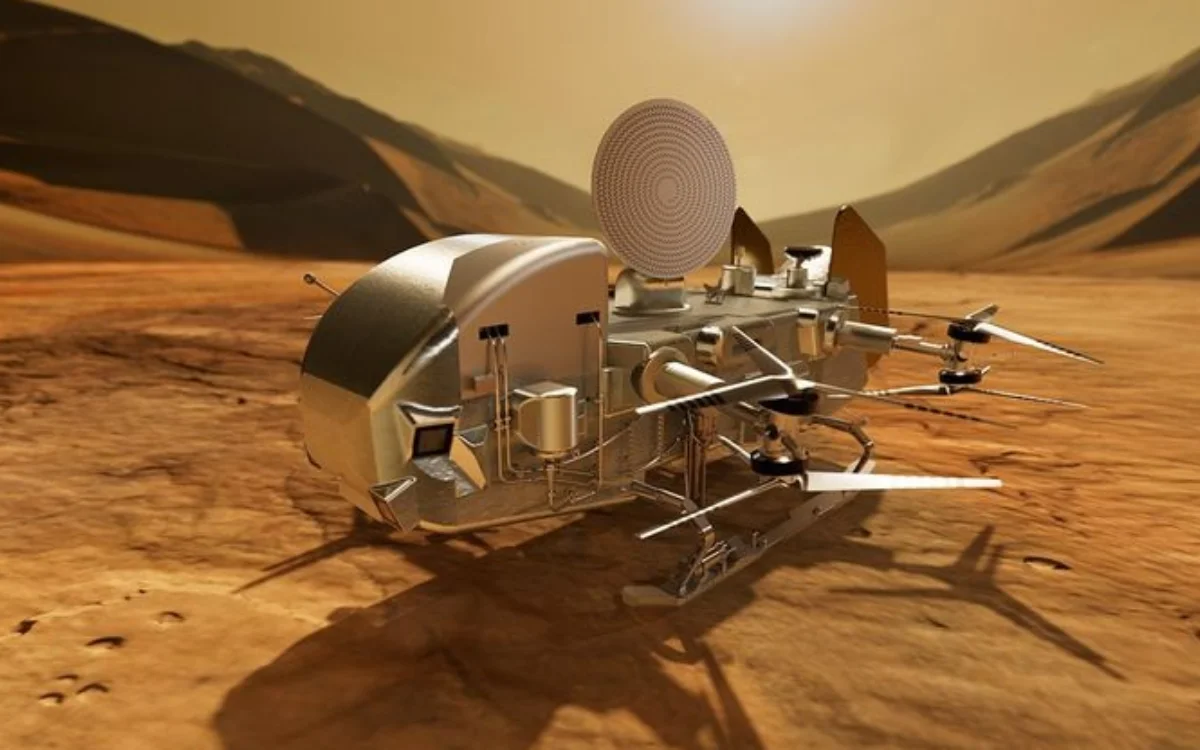
The mission will help researchers back on Earth gain a better understanding of its habitability, identify any astrobiological compounds of interest, and investigate how far chemistry has progressed.
NASA also said the mission will also ‘search for chemical indicators of water-based or hydrocarbon-based life’.
The rotorcraft’s design means that exploration on Titan won’t be restricted to the area around its landing site.
Its rotors will carry it up to 70 miles across the alien landscape during its mission, giving it the chance to stop at a variety of different locations.
“Flying several miles each flight through the yellowish, smoggy haze of Titan’s nitrogen-rich atmosphere, Dragonfly will stop at a variety of geologic sites, where it will collect samples of surface material for analysis inside the rotorcraft by a suite of scientific instruments,” NASA said.
Dragonfly is expected to make one flight every one to two Tsol, or Titan days, which is about 16 Earth days.
The NASA mission just hit a major milestone, and could be blasting off sooner than you’d think
The Dragonfly rotocraft recently hit a major milestone, as building and testing began at the Applied Physics Laboratory at Johns Hopkins University.
“Building a first-of-its-kind vehicle to fly across another ocean world in our solar system pushes us to the edge of what’s possible, but that’s exactly why this stage is so exciting,” Dragonfly principal investigator Elizabeth Turtle said.

“The team is doing an outstanding job, and every component we install and every test we run brings us one step closer to launching Dragonfly to Titan.”
But groundbreaking space exploration doesn’t come cheap, and the entire mission is set to cost upwards of $3 billion.
NASA says Dragonfly could launch as early as July 2028, which means it would arrive on Titan in late 2034.
DISCOVER SBX CARS: The global premium car auction platform powered by Supercar Blondie
Follow topics and authors from this story to see more like this in your personalised homepage feed and to receive email updates.