China creates world's largest magnet that weighs 582 tonnes to help build an artificial sun

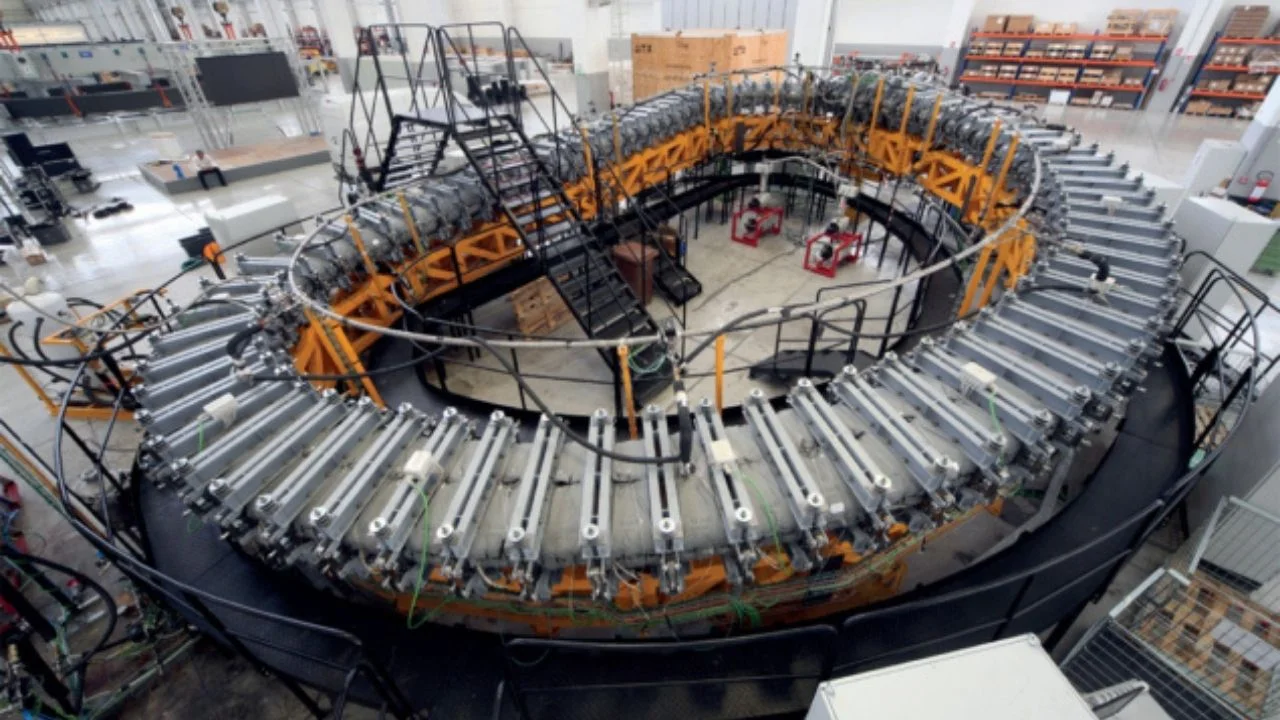

China has made history by creating the world’s largest magnet, and boy is it large, it weighs 582 tonnes and was designed to help build an artificial sun.
The gigantic piece of technology has just passed a major round of testing, bringing China’s ambitious fusion energy plans one step closer to reality.
While it might look like an oversized metal ring, its job is to contain material that’s hotter than the sun itself without letting it touch the reactor walls.
If everything goes to plan, it could help power a next-generation reactor that’s aiming to demonstrate fusion energy before the end of the decade.
How the world’s largest magnet is helping build an artificial sun
When it comes to building record-breaking futuristic technology, China has gone big, massive even.
Scientists have successfully tested what is now the world’s largest fusion magnet – an enormous superconducting toroidal field magnet that weighs an eye-watering 582 tonnes.
The magnet recently completed full-parameter testing at the Institute of Plasma Physics in Hefei, clearing one of the biggest hurdles before it can be installed inside China’s next-generation fusion reactor.
And its size isn’t the only thing that’s impressive.
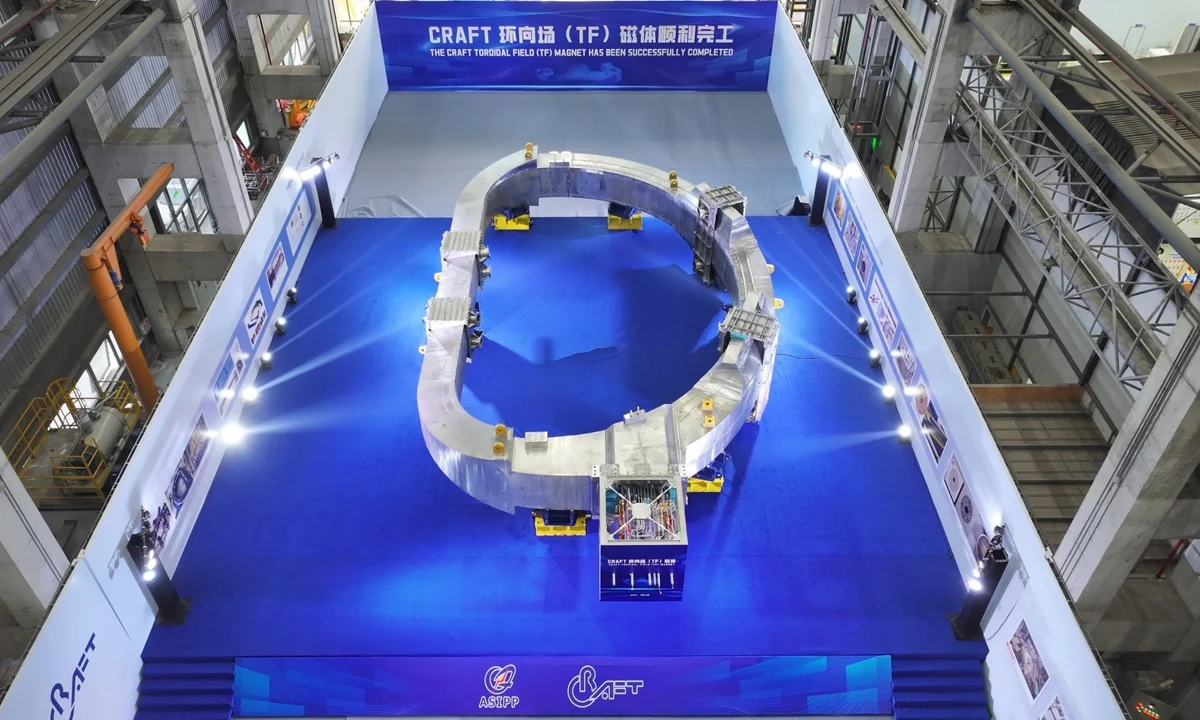
The colossal magnet can reportedly store almost three times as much magnetic energy as the toroidal field magnets being used in ITER, the huge international fusion project involving 35 countries that’s currently under construction in France.
Eventually, 16 of these massive coils will be arranged in a ring to generate a magnetic field, all using technology developed in China.
That’s because this isn’t an ordinary world’s largest magnet; it’s designed to keep something very, very hot under control.
Why the magnet is needed for the artificial sun
Inside a fusion reactor, scientists heat hydrogen fuel into plasma at temperatures of more than 100 million degrees Celsius – even hotter than the core of the Sun.
At those temperatures, nothing can physically contain the plasma.
Instead, the giant magnet acts like an invisible cage, using powerful magnetic fields to keep the plasma suspended safely in place so it never touches the walls of the reactor.
Without it, the entire process simply wouldn’t work.
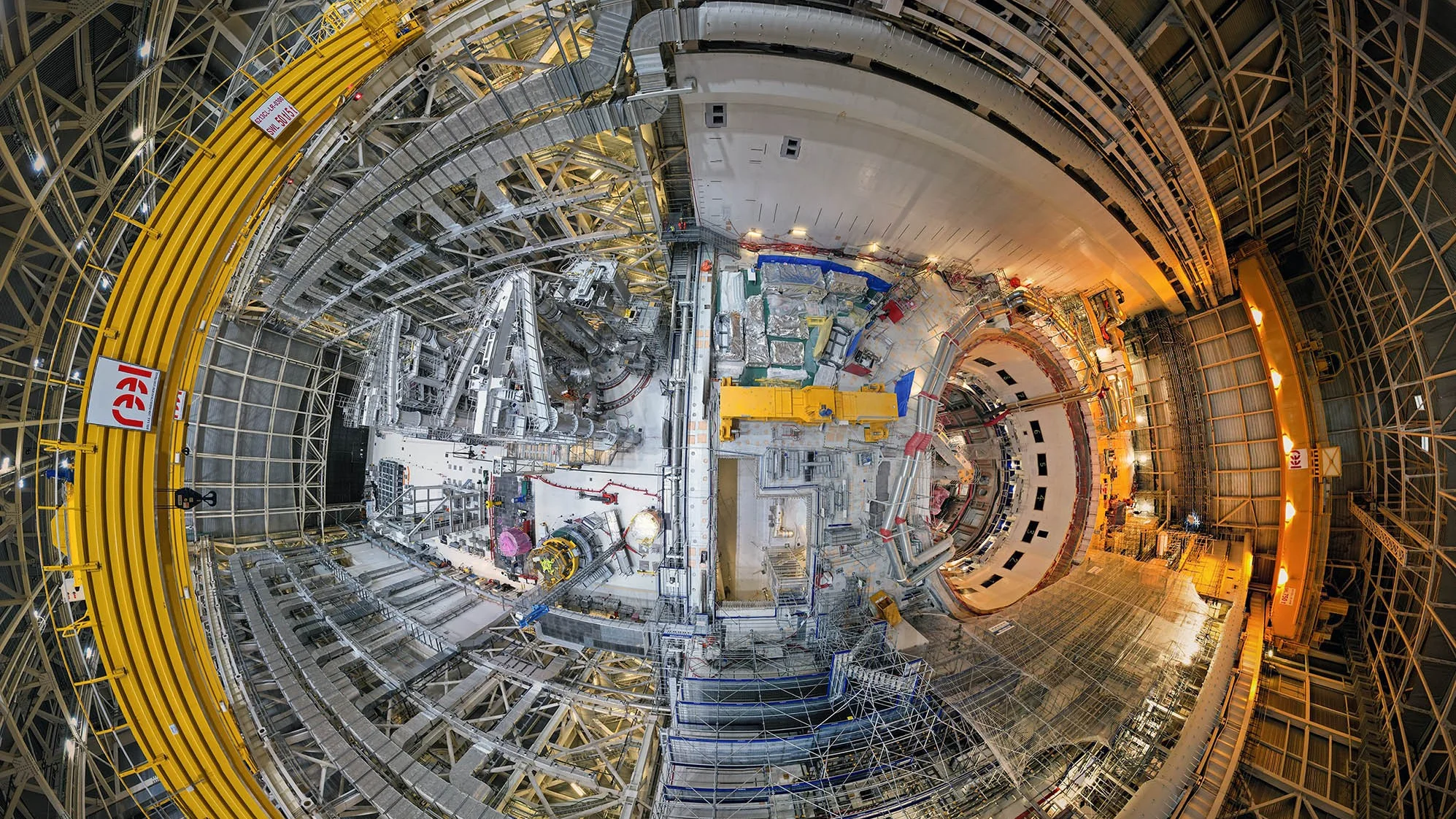
The record-breaking magnet has been built for China’s Burning Plasma Experimental Superconducting Tokamak, better known as BEST, which is scheduled to be completed by the end of 2027.
Turning ‘artificial sun’ into a source of energy
The country is then aiming to demonstrate fusion power generation by around 2030, marking another major milestone in the race to develop what many scientists believe could become one of the cleanest energy sources of the future.
Unlike today’s nuclear power plants, fusion doesn’t split atoms apart.
Instead, it fuses them together, recreating the same process that powers the sun while producing vast amounts of energy with no carbon emissions during operation.
There’s still plenty of work to do before fusion powers homes on a large scale, but successfully testing the world’s largest fusion magnet is a huge engineering achievement.
And if China’s timeline stays on track, this 582-tonne giant could become one of the most important pieces of technology in the race to turn an ‘artificial sun’ into a real source of electricity.
A short history of artificial suns
- 2006 – The ITER project is officially launched, bringing together 35 countries to build the world’s largest experimental fusion reactor in France.
- 2020s – China begins construction of the Burning Plasma Experimental Superconducting Tokamak (BEST), a next-generation fusion reactor designed to bridge the gap between research and commercial fusion power.
- July 2026 – China successfully tests the world’s largest magnet, a 582-tonne toroidal field magnet that will be used inside the BEST reactor.
- By the end of 2027 – Construction of the BEST reactor is expected to be completed.
- Around 2030 – China hopes to carry out its first demonstration of electricity generation using fusion power.
- Future – If successful, fusion reactors could provide abundant low-carbon energy by recreating the same process that powers the Sun, although commercial fusion power plants are still expected to be years away.