China now has the world's fastest supercomputer for the first time since 2017, surpassing the US

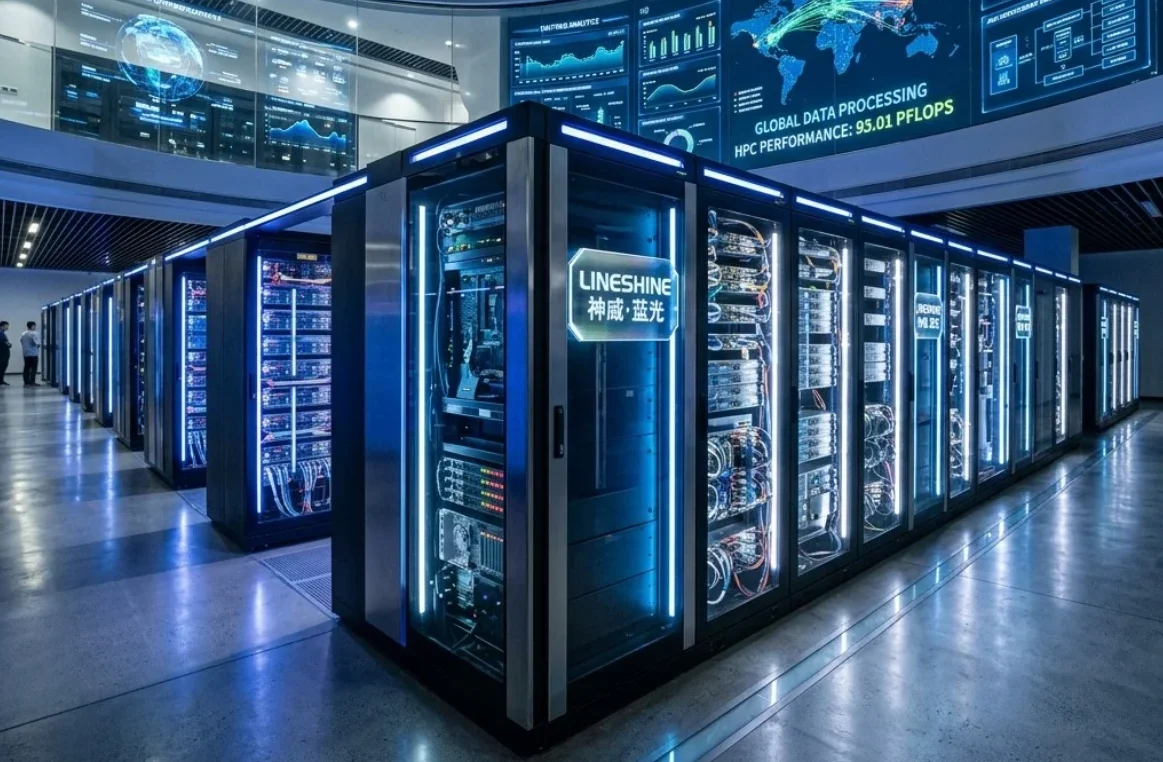

China has reclaimed the title of being home to the world’s fastest supercomputer for the first time since 2017, leapfrogging both the US and Germany.
The newly crowned machine has topped the latest TOP500 rankings, which track the most powerful supercomputers on the planet.
It marks a major milestone in the ongoing global race for computing supremacy and AI development.
The breakthrough also comes despite years of restrictions aimed at limiting China’s access to advanced chip technology.
China now has the world’s fastest supercomputer
China’s new supercomputer, called LineShine, has officially been ranked as the fastest of all the futuristic supercomputer tech in the world after debuting at the top of the latest TOP500 list.
Based at the National Supercomputing Center in Shenzhen, the machine achieved an astonishing 2.198 exaflops on the High Performance Linpack benchmark, which sounds totally fake.
But that actually means that the supercomputer can perform more than two quintillion calculations every second.
That was enough to overtake the United States’ El Capitan, which previously held the number one spot, while Germany’s Jupiter dropped down to five.
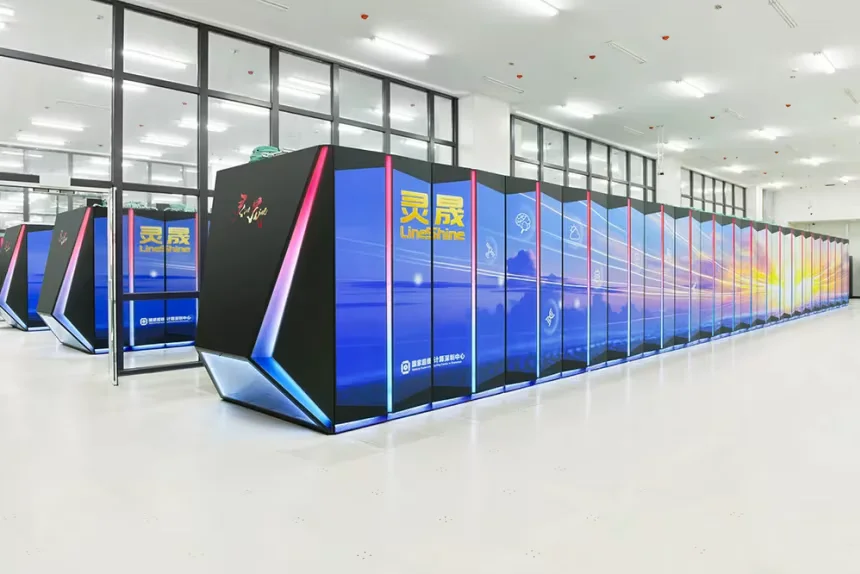
It’s the first time since the Sunway TaihuLight topped the rankings in 2017 that a Chinese-built system has claimed the crown once again.
Even more impressive is the fact that LineShine achieved its record-breaking performance using only CPUs rather than the GPUs that power most modern AI-focused supercomputers.
The system reportedly contains almost 14 million processor cores and was built using domestically developed technology, showing China has come to play in the supercomputer arena.

LineShine could cause massive advancements in AI
While supercomputers are often associated with scientific research, they also play an increasingly important role in artificial intelligence.
Machines like LineShine are used to develop advanced AI models, carry out climate simulations, design new medicines, and tackle engineering challenges that would be impossible using conventional computers.
The latest rankings also show off the fierce competition between China and the US, with both countries investing heavily in high-performance computing as AI becomes an even more important part of global technology.
Although the United States still has a few of the world’s fastest machines, China’s return to the top spot shows how quick the global computing landscape is evolving.