UCSD Center for the Future of Surgery hosts live demonstration of the first ever humanoid robot surgeon

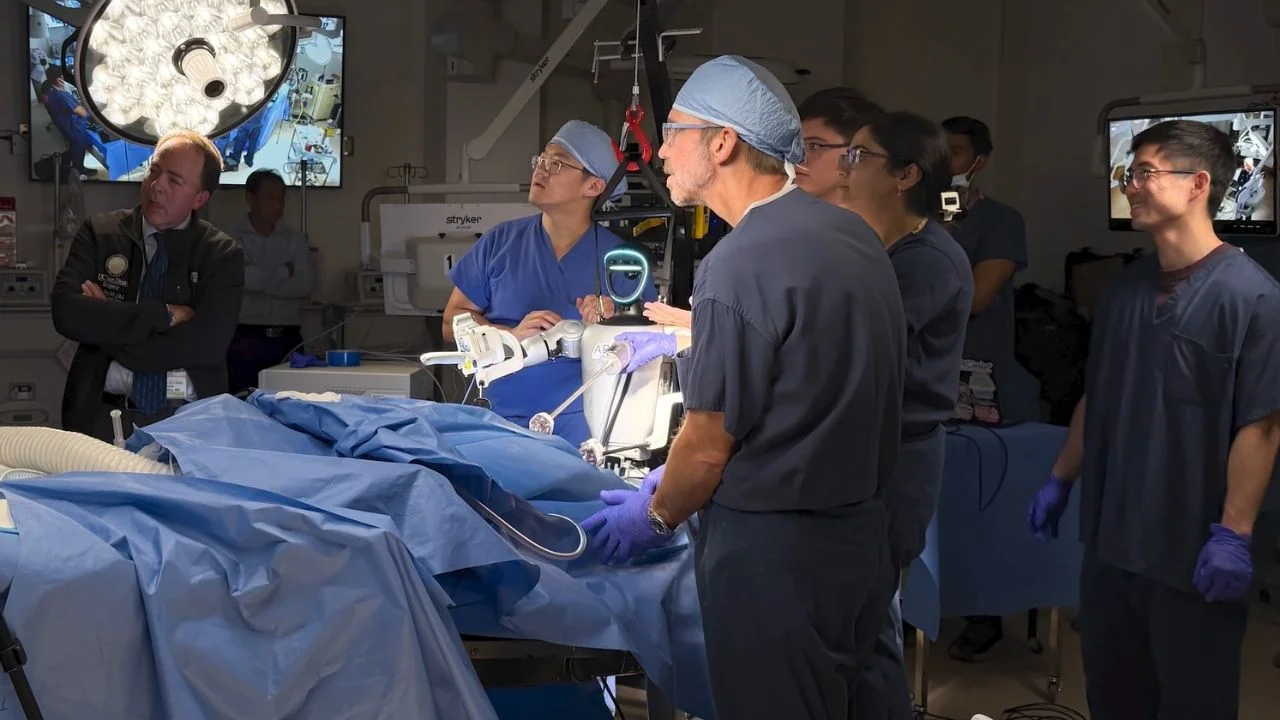

The first-ever humanoid robot surgeon is stepping into the operating room, and they could eventually help doctors reach patients who would otherwise struggle to access specialist care.
Researchers at the University of California San Diego have been exploring how these machines could fit into existing surgical procedures.
The technology is still a work in progress, with plenty of hurdles to overcome before it can be used on human patients.
But a new demonstration has offered a glimpse of what the future of medicine could look like.
Humanoid robot surgeon ‘Surgie’ puts its surgical skills to the test
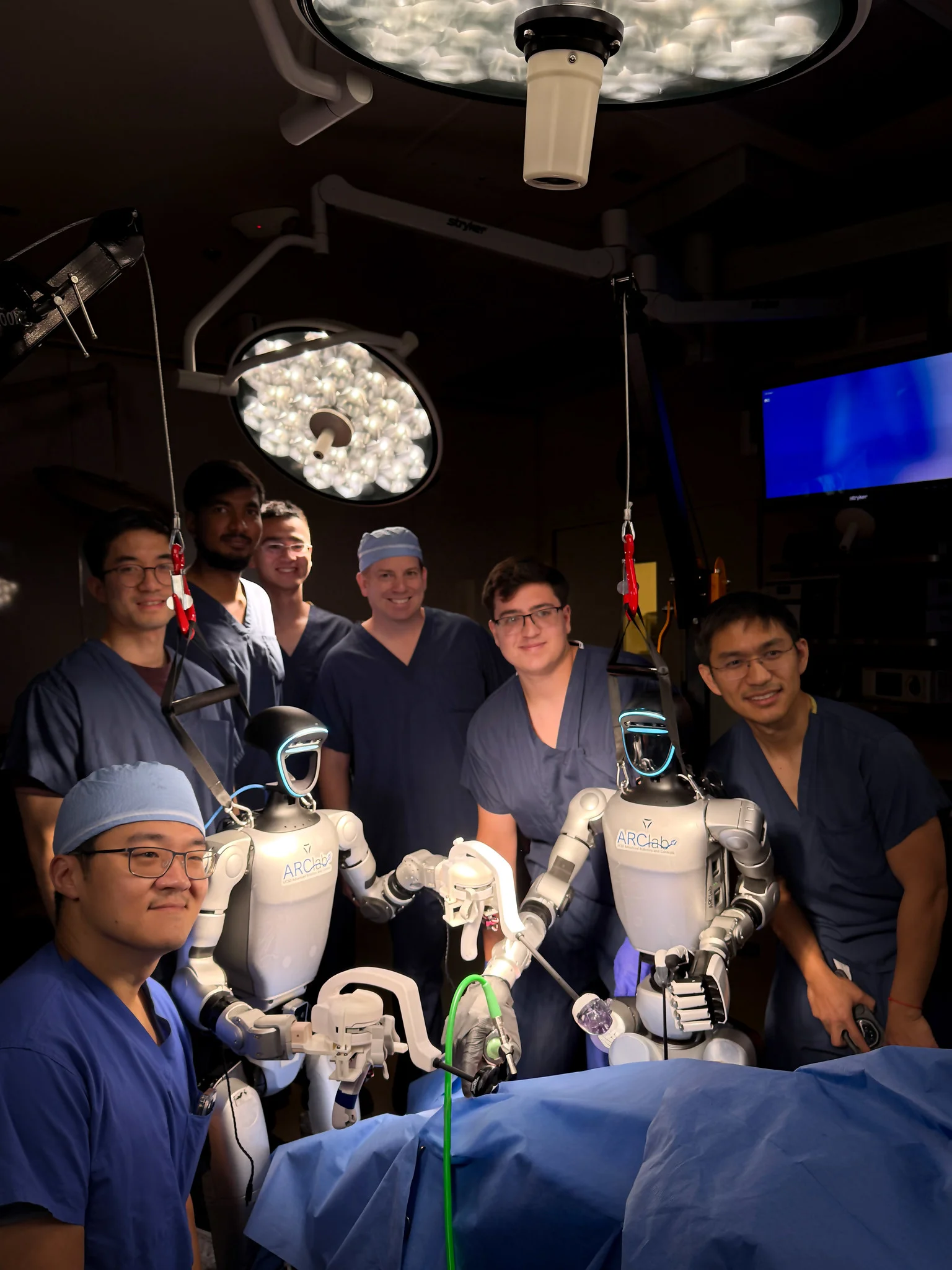
The UC San Diego Center for the Future of Surgery recently showcased Surgie, a humanoid robot designed to let experienced surgeons perform operations remotely.
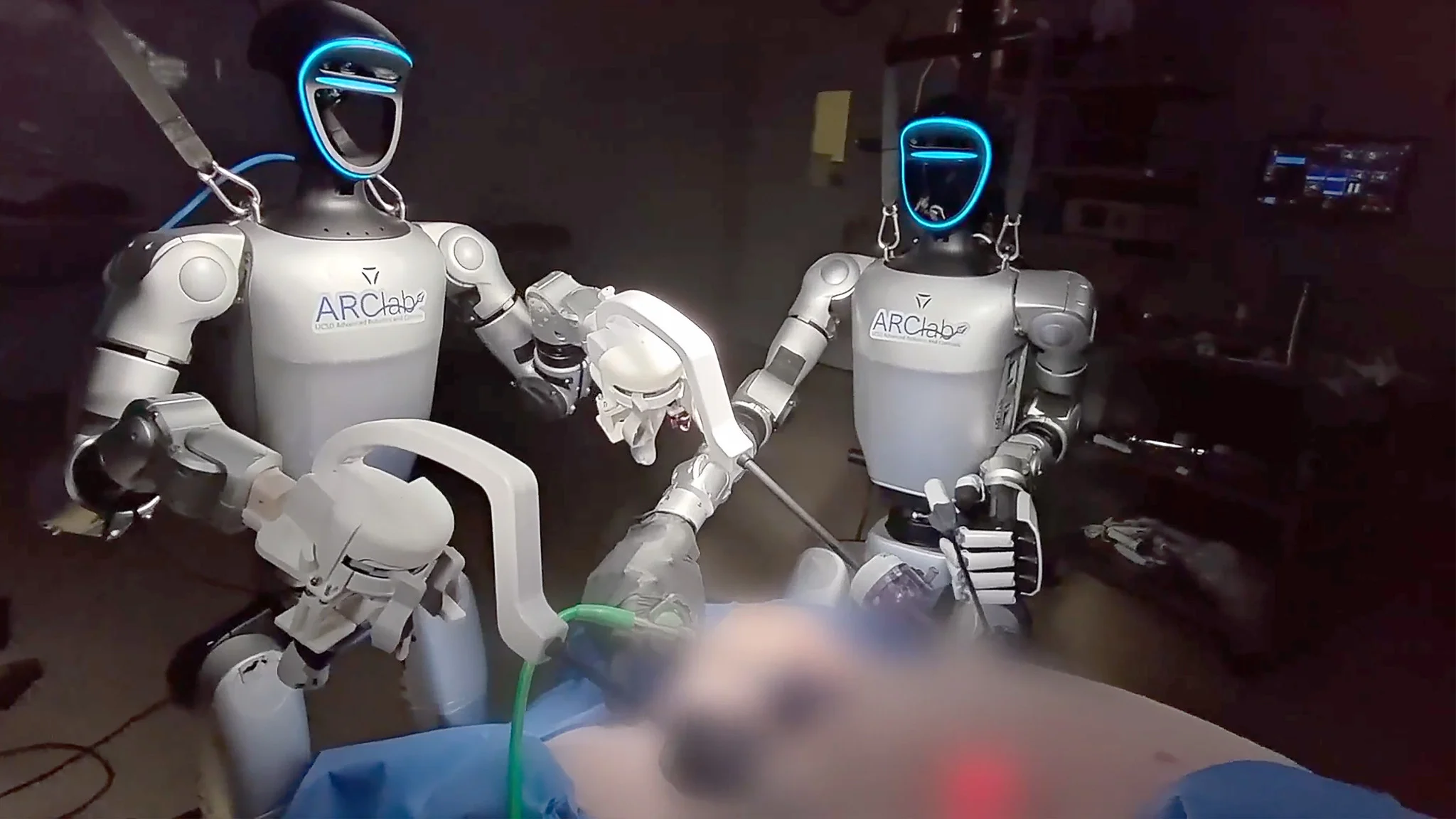
The demonstration followed a world-first preclinical trial in which researchers used modified Unitree G1 humanoid robots to carry out two gallbladder removal procedures on live pigs.
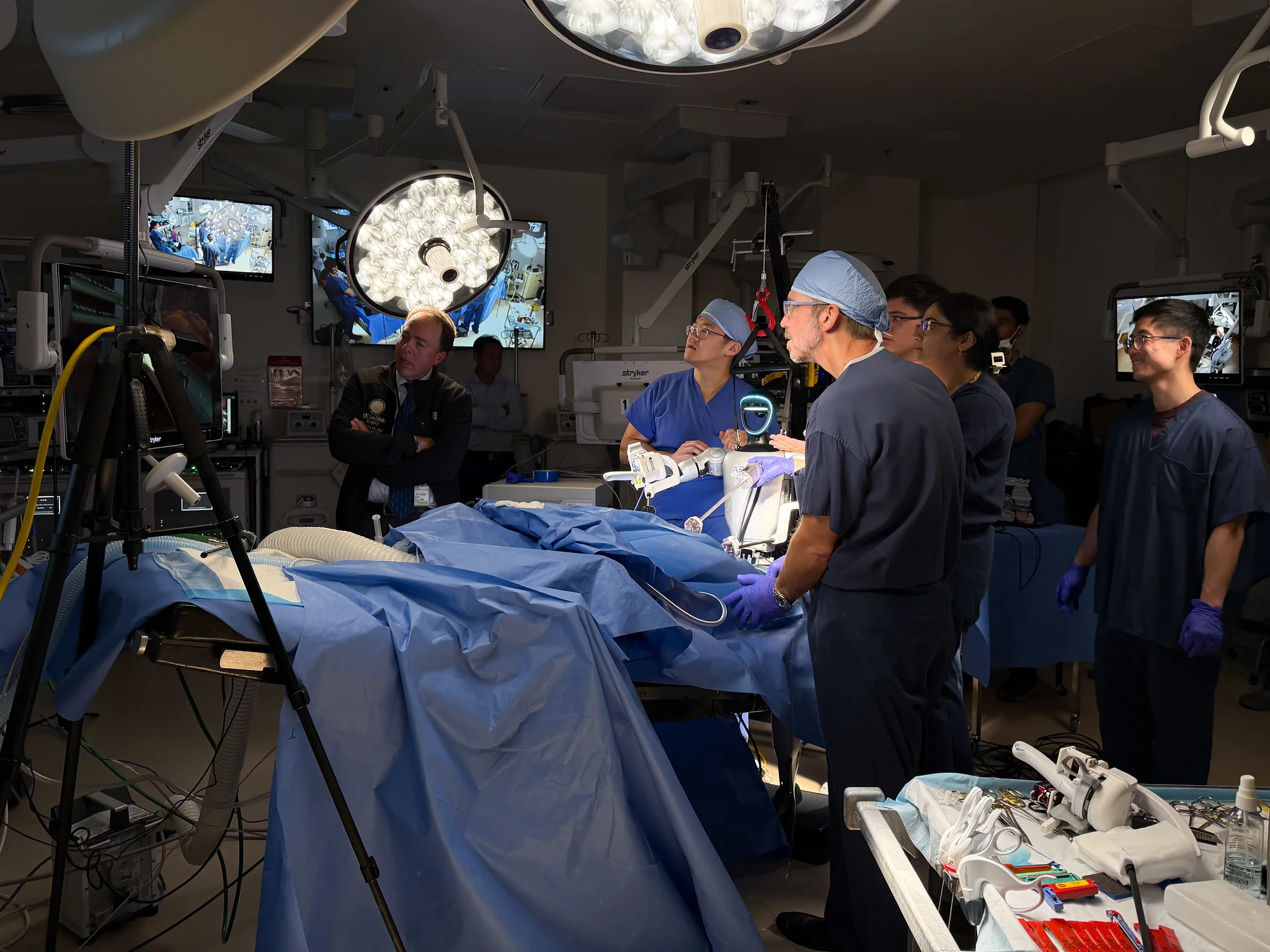
In the first operation, a human surgeon remotely controlled one robot while a human assistant helped with the procedure.
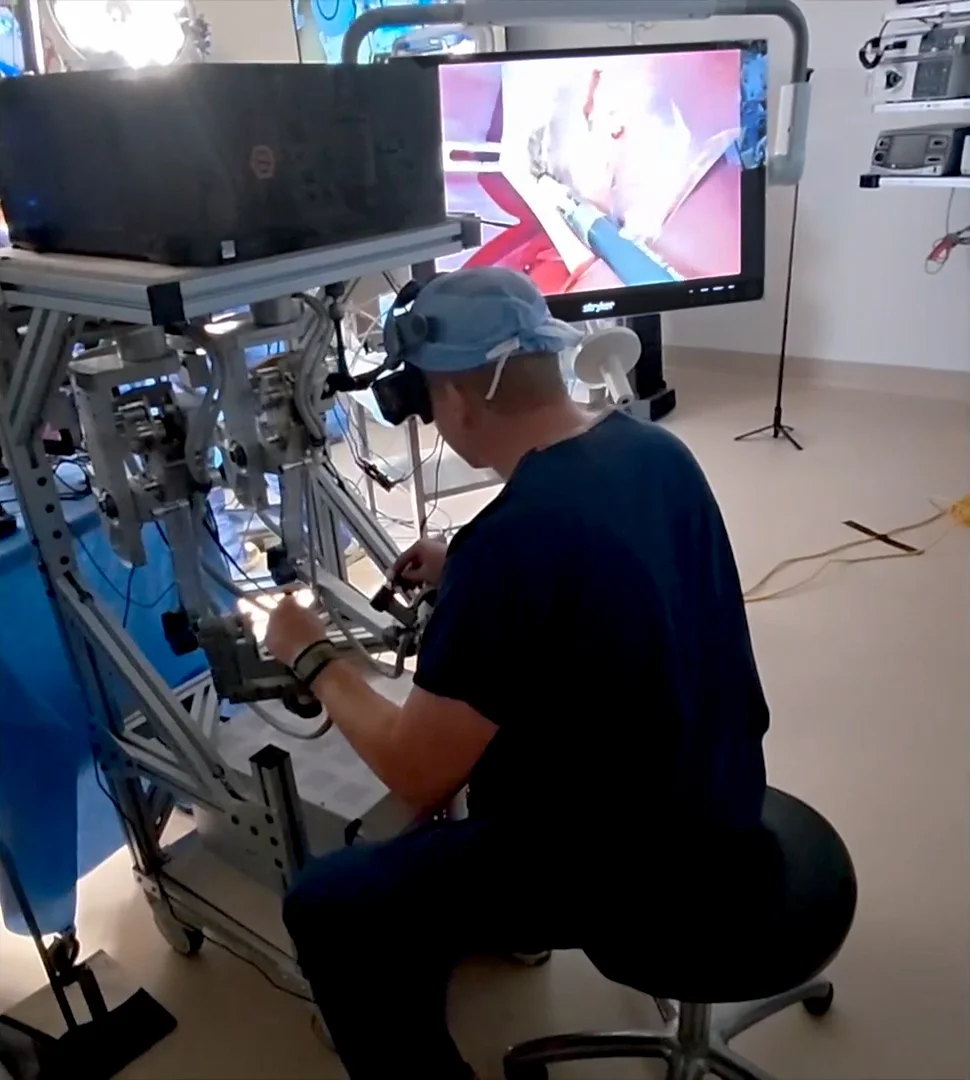
For the second, two humanoid robots worked together, with one acting as the surgeon and the other as the assistant.
The robots were controlled by human specialists using a teleoperation system, meaning they were not making independent decisions about how to operate.
Researchers hope the approach could eventually help surgeons extend their expertise to hospitals and communities that lack access to expensive robotic surgery equipment.
That could be particularly useful as healthcare systems face growing demand for surgical procedures and struggle to train enough specialists to keep up.
Doctors must train to control the robots
Despite their humanoid appearance, these machines cannot simply walk into an operating room and start working.
Surgeons must learn to control them using specialized equipment that translates their own movements into the robot’s actions.
Training involves tasks such as carefully lifting small blocks from pegs and moving rings between positions, and these exercises help doctors develop the precision needed to manipulate surgical instruments through the robot.
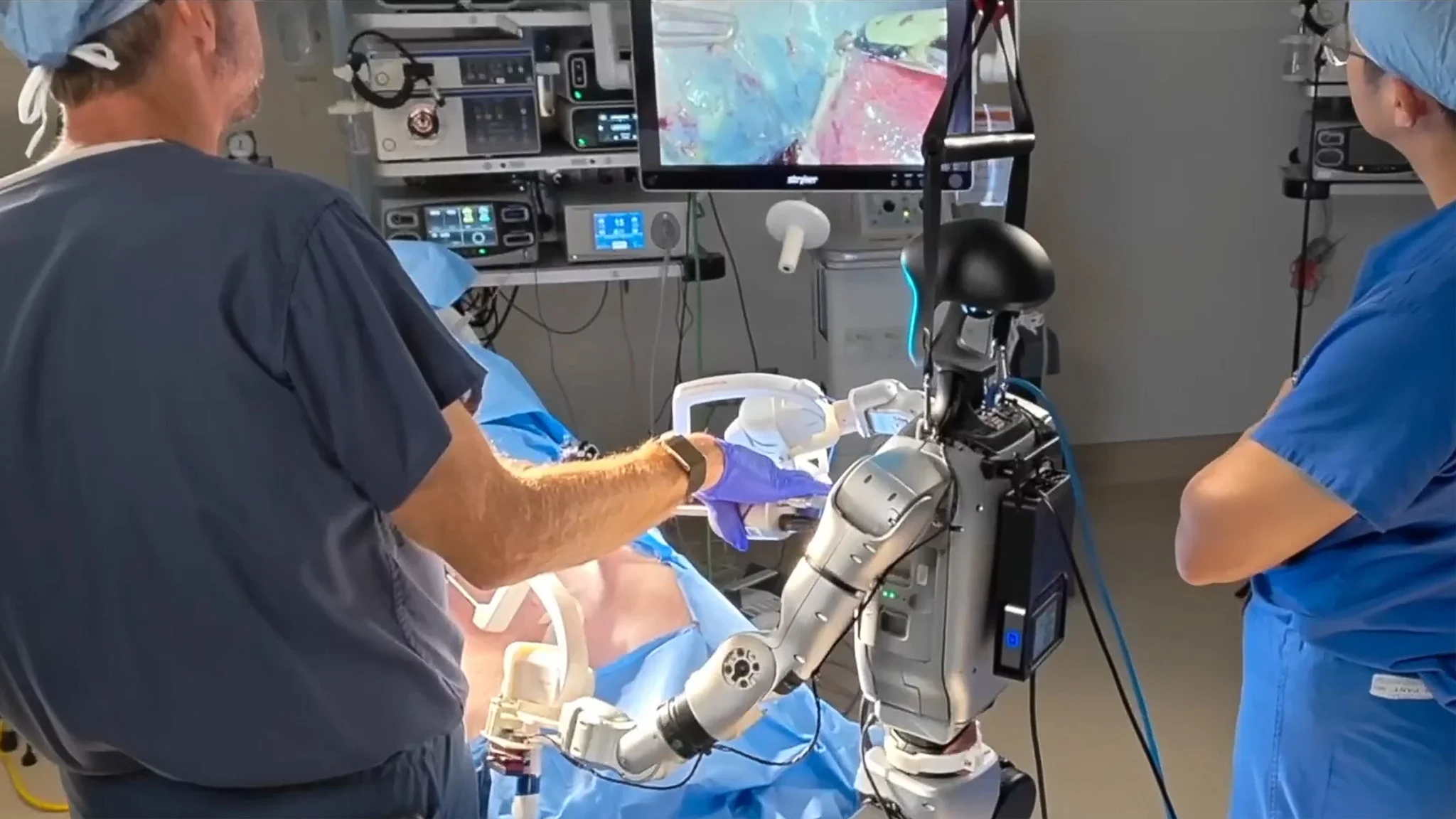
The researchers also had to work around the machines’ physical limitations, like their relatively short arms can make it difficult to reach certain areas, meaning the robots must be positioned carefully before an operation begins.
Testing on live animals also presented challenges that cannot be fully replicated using simulations. Breathing causes the body to move, while blood flow affects how tissue behaves during surgery.
The team found that the second procedure was faster and involved fewer collisions and stoppages than the first. However, the operations still took longer than comparable procedures performed by human surgeons.
Robot surgeons still face major hurdles before human trials
There is still a long way to go before humanoid robots become a familiar sight in hospitals.
During the tests, the robots’ shoulder joints overheated after around 20 minutes of operation, requiring researchers to cool them manually.
Their battery life also needs improvement, and the machines cannot currently be sterilized to the standards required for surgical procedures.
For now, the researchers are focused on developing the technology and addressing these safety concerns rather than introducing autonomous surgery.
In the longer term, robots could potentially gain assistive capabilities, such as preventing accidental collisions with sensitive anatomy, and more advanced automation could follow as the technology develops.
The researchers also stress that the goal is not to replace surgeons, but to allow their expertise to reach more patients.
If the technology can be made safe and reliable, a specialist could eventually perform parts of procedures remotely across multiple locations, bringing minimally invasive surgery to communities that might not otherwise have access to it.