NASA telescope discovers Sci-Fi-like half-lava world
 Adam Gray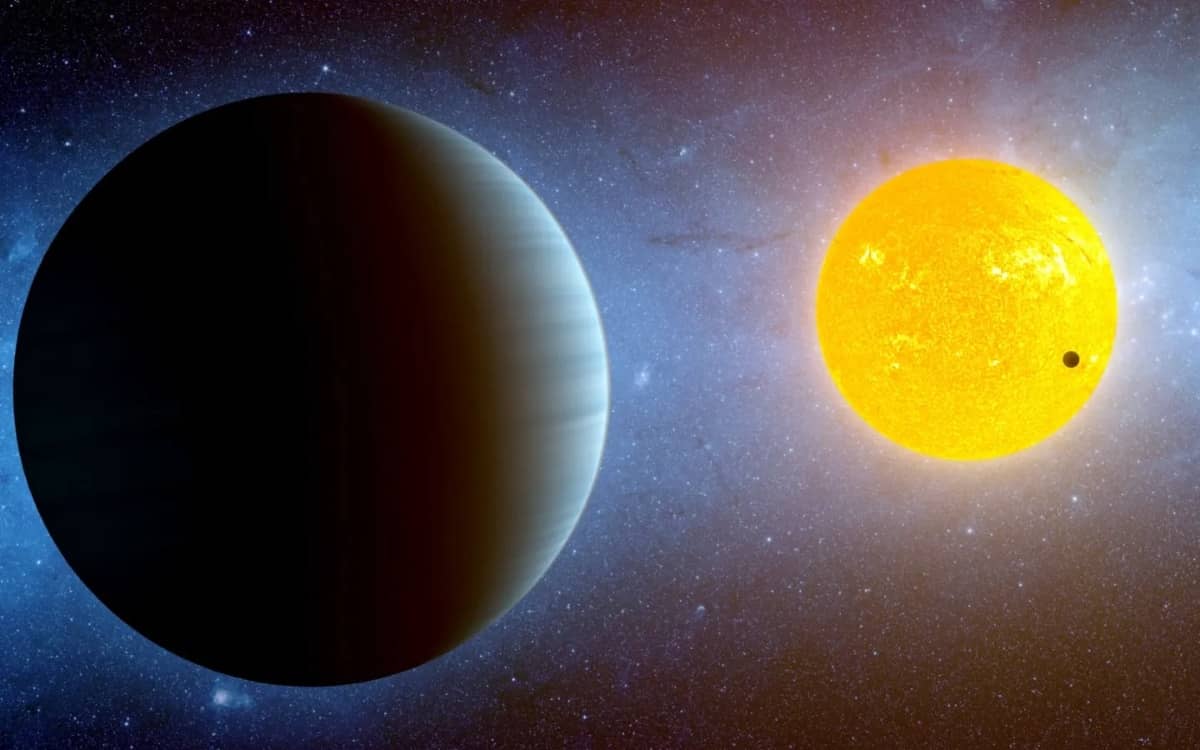

Scientists have made a startling discovery.
Apparently, they’ve identified a world almost identical in size to Earth, with a star almost identical to our sun.
That’s where the similarities end, though.
READ MORE! Scientists send message to nearby planets hoping for a response
The exoplanet – a world outside our solar system – is 10 times younger, it’s exponentially hotter, and is half-soaked in molten lava seas.
Doesn’t sound like the type of place you’d want to vacation.
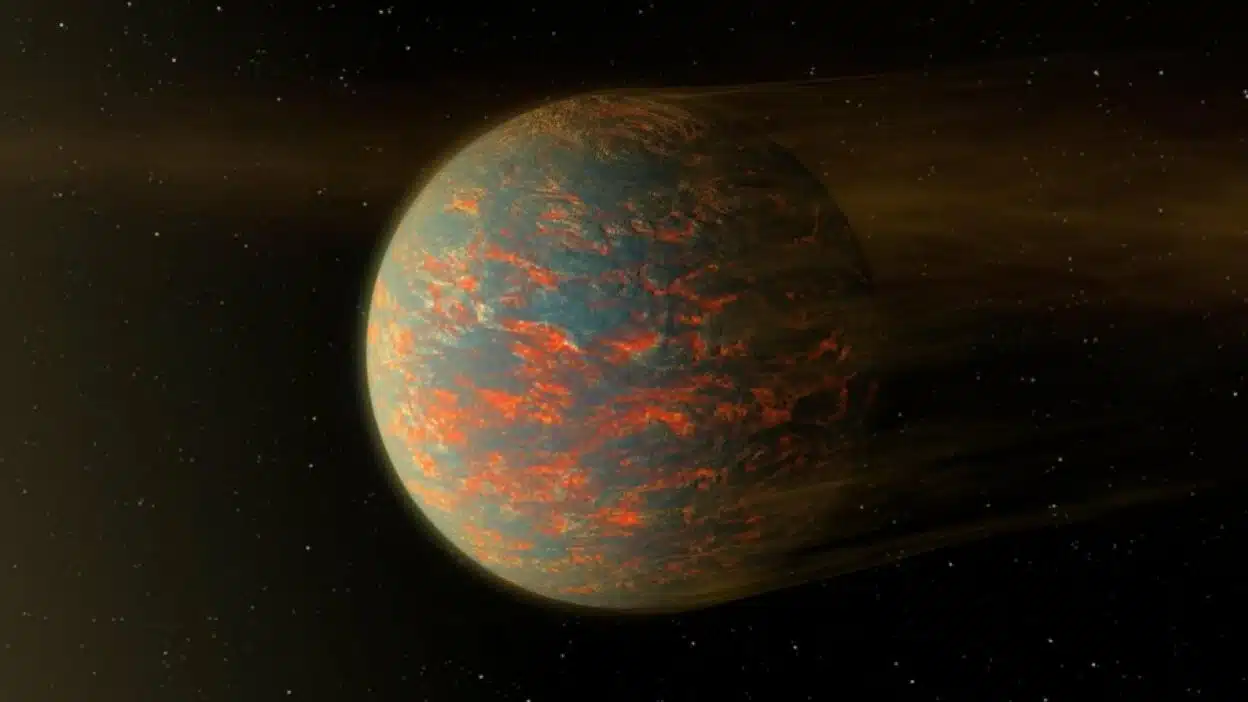
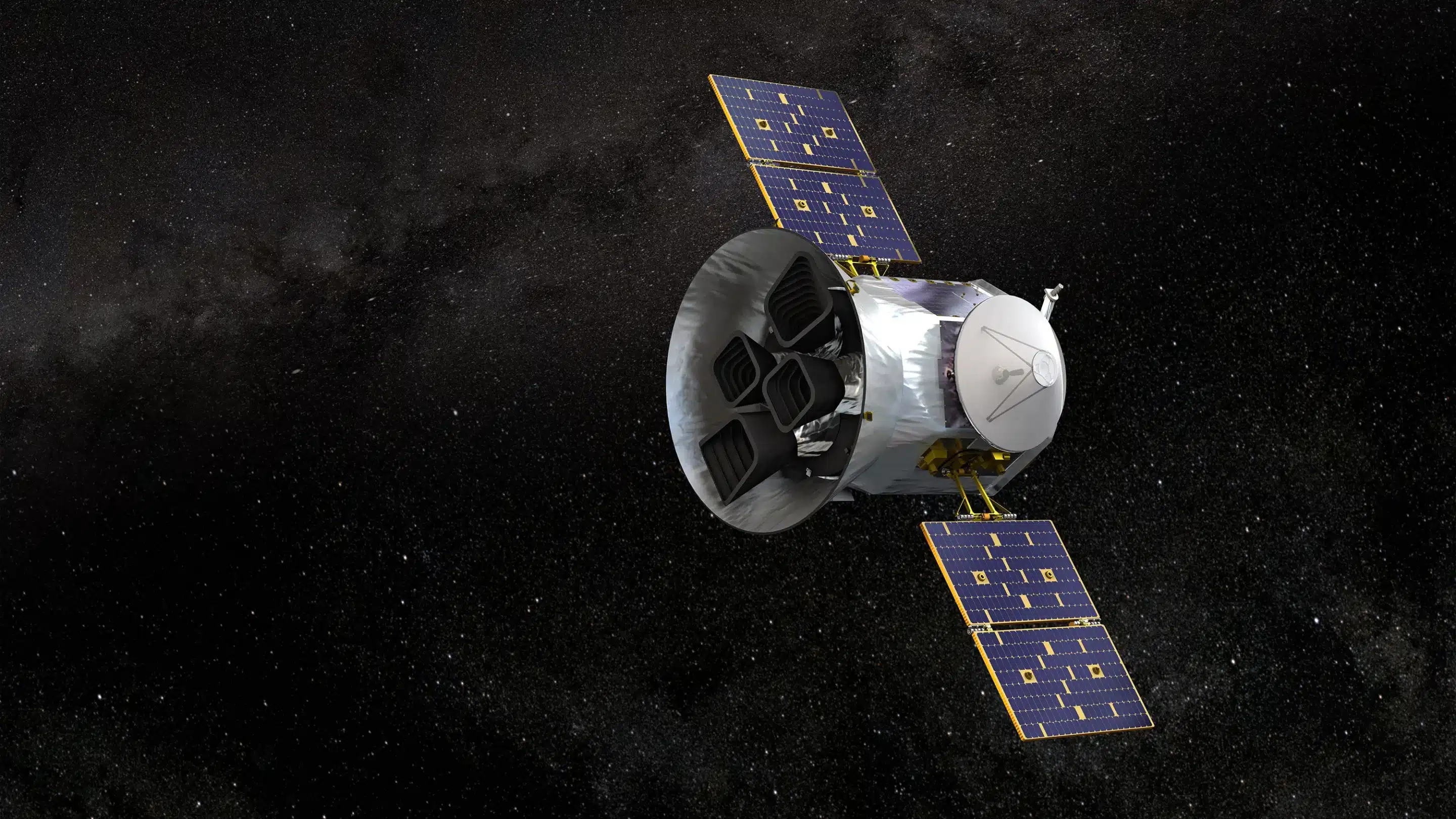
The new planet, officially known as HD 63433 d, was discovered by astronomers using NASA’s TESS (Transiting Exoplanet Survey Satellite) probe.
And it’s not the only planet the NASA telescope has made, having recently revealed a ‘candyfloss’ planet where it rains sand.
Apparently, the scorched world is the smallest and closest known young exoplanet, at ‘only’ 73 light-years away.
What’s more, scientists estimate the planet to be around 400 million years old, meaning it’s a spring chicken compared to our 4.5 billion-year-old home planet.
In a new paper published in The Astronomical Journal, the planet’s discoverers said: “Young terrestrial worlds are critical test beds to constrain prevailing theories of planetary formation and evolution.”
📣 Discovery Alert! 📣
— NASA Exoplanets (@NASAExoplanets) January 10, 2024
An Earth-sized exoplanet with a lava hemisphere! HD 63433 d is in a system with two previously known worlds. A ''year'' there, one orbit of its star, takes 4.2 days. https://t.co/8j8OtbkMRo pic.twitter.com/c00oOTFCr6
Astronomers are on a mission to discover thousands of exoplanets in orbit around the brightest dwarf stars in space.
So far the confirmed number of exoplanets stands at 5,569, although there are over 10,000 more under review.
To be frank, that’s just scratching the surface, as there’s hundreds of billions of galaxies, with trillions of stars.
And if most stars have one or more planets around them, there’s an unfathomable number of hidden worlds.
Melinda then used new data from TESS and Gaia to improve the membership of Ursa Major and measure how long it takes for those stars to rotate. The rotational speed of stars decreases over time, so we can sue this information to improve our estimate of the planet's age! pic.twitter.com/dG0QsVj4hU
— Andrew Vanderburg (@amvanderburg) January 12, 2024
What makes HD 63433 d so intriguing, though, is that one of its sides is always facing its star.
What’s more, it’s also much closer to its star than Earth is to the sun.
To be precise, it’s eight times closer to its host star than Mercury is to the sun, which means the exoplanet’s orbit is so snug, its year is only four days long.
According to astronomers, the side facing the star is subjected to temperatures around 2,300 degrees Fahrenheit.
However, the backside of the planet – which never receives starlight – remains a mystery, but researchers hope to learn more about it in the future.
The most powerful infrared telescope in the cosmos, the James Webb Space Telescope, could reveal more details about this young world.
DISCOVER SBX CARS: The global premium car auction platform powered by Supercar Blondie
Follow topics and authors from this story to see more like this in your personalised homepage feed and to receive email updates.