Apple creates a way to conclusively prove if a photo is real or if it's AI-generated



Fake photos that are AI-generated now look so convincing that sometimes even a trained eye can’t tell what’s real anymore, but that’s where Apple comes in.
Apple is tackling the problem with a new camera feature designed to prove that a photo was actually captured by an iPhone camera sensor.
Called Apple Reference Image, the system creates a cryptographically secured record of what the camera captured and when it happened.
It debuts on the iPhone 18 Pro and iPhone 18 Pro Max.
Apple wants to make fake photos much harder to pass off as real
Futuristic AI image generators have made it incredibly easy to create photorealistic pictures of things that never actually happened.
That can be harmless fun, but it becomes a much bigger problem when a photo is supposed to prove that something really happened.
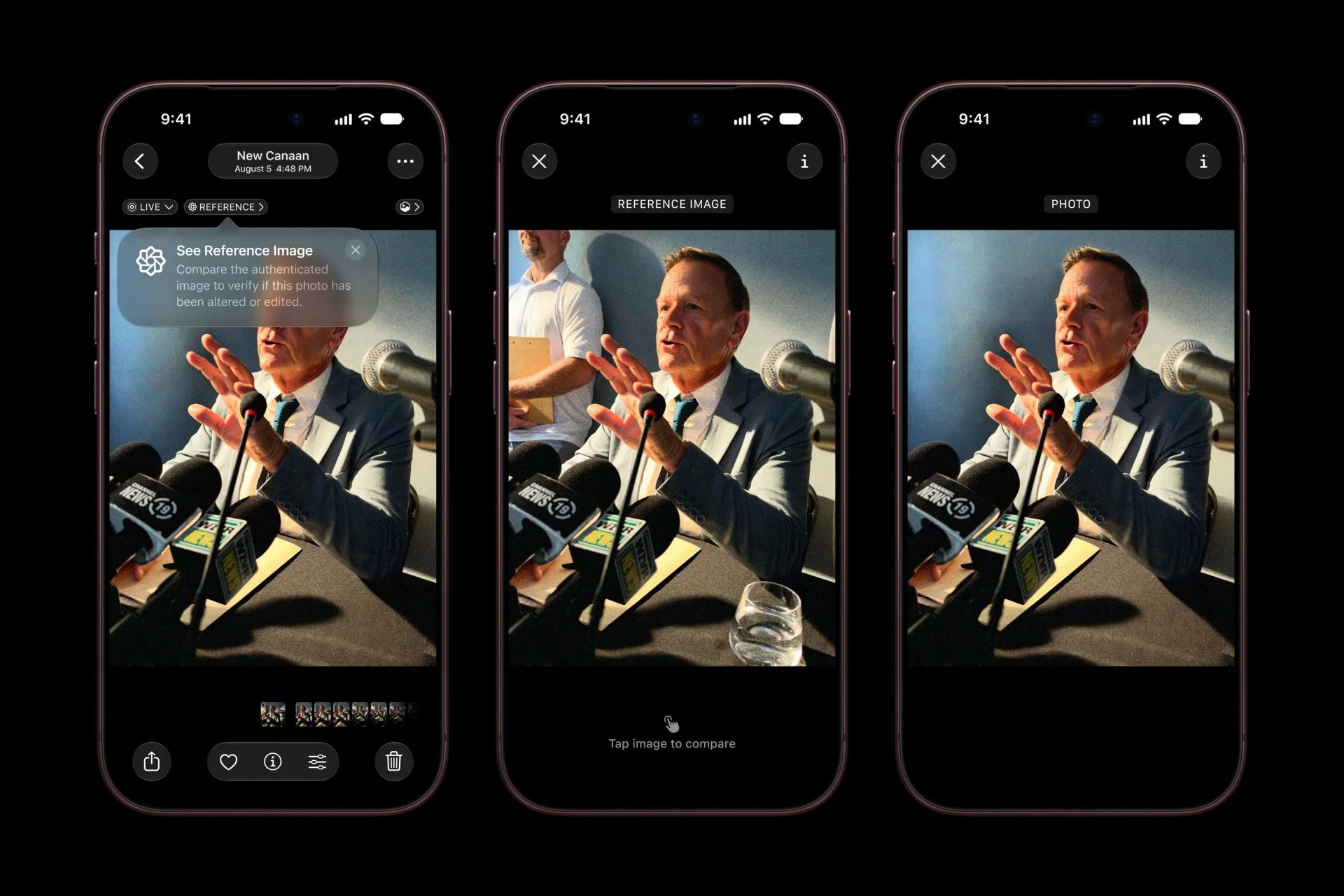
The answer is Apple Reference Image, an opt-in camera mode that creates a securely timestamped reference image that is tied to what the iPhone’s actual camera sensor captured.
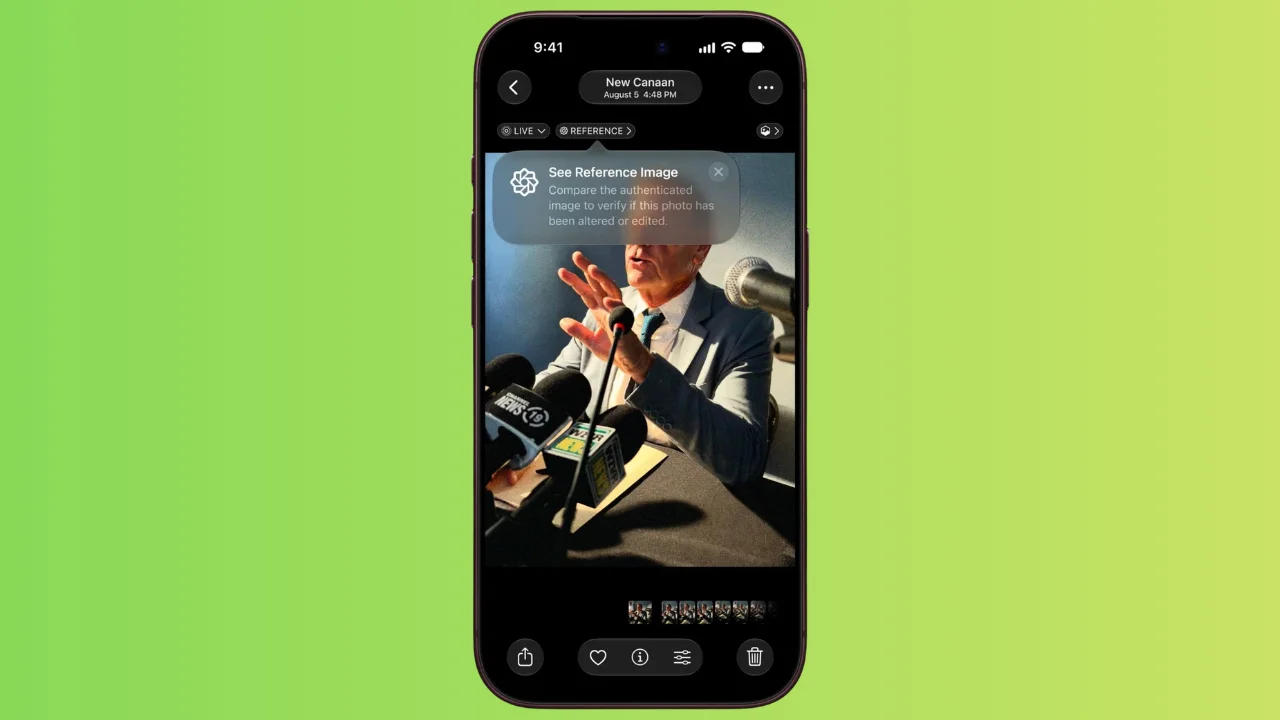
The system is designed so that the image can be verified later, rather than simply asking people to trust that the person who posted it is telling the truth.
The tech brand said the feature was designed around three things: making sure the image really represents what the sensor captured, protecting it against tampering, and preserving the photographer’s privacy.
The clever part happens before the photo even leaves your iPhone
When Reference mode is switched on, the camera sensor enters a specialized secure mode and cryptographically signs the pixel data immediately after it is captured.
That creates what the tech giant calls a ‘secure digital negative’ containing the image data, sensor information, and secure timestamps.
The timestamping is particularly interesting because it isn’t simply relying on the time shown on the iPhone.
Instead, the system establishes a window proving that the photo was captured between two cryptographically verified points in time.
The secure digital negative is then processed using Apple’s Private Cloud Compute system, which handles things such as demosaicing, tone mapping and compression in a verifiable environment.
Apple says even it cannot see the image data being processed by Private Cloud Compute.
The final reference image can then be checked to establish that it came from a genuine iPhone camera sensor and wasn’t secretly altered along the way by AI.
It could be a big deal in the age of AI-generated media
There are already systems designed to track an image’s history, including the C2PA standard, but the brand argues that these approaches can leave opportunities for something to go wrong during the editing process.
Apple Reference Image instead tries to establish trust right from the camera sensor itself; however, only through the iPhone 18 Pro and Pro Max camera sensor.
It also has a revocation system, meaning Apple can invalidate individual reference images or even images from a particular sensor if they are discovered to be fraudulent.
And there’s another clever privacy feature: the system isn’t designed to publicly reveal which iPhone took a particular photo or link multiple photos back to the same device.
So instead of simply asking, “Does this photo look real?”, Apple is trying to give people a much better question to ask: “Can this photo prove where it came from?”
That could become increasingly useful as AI-generated images become almost indistinguishable from the real thing.