Scientists have discovered what the optimal robot body looks like and it has 20 legs

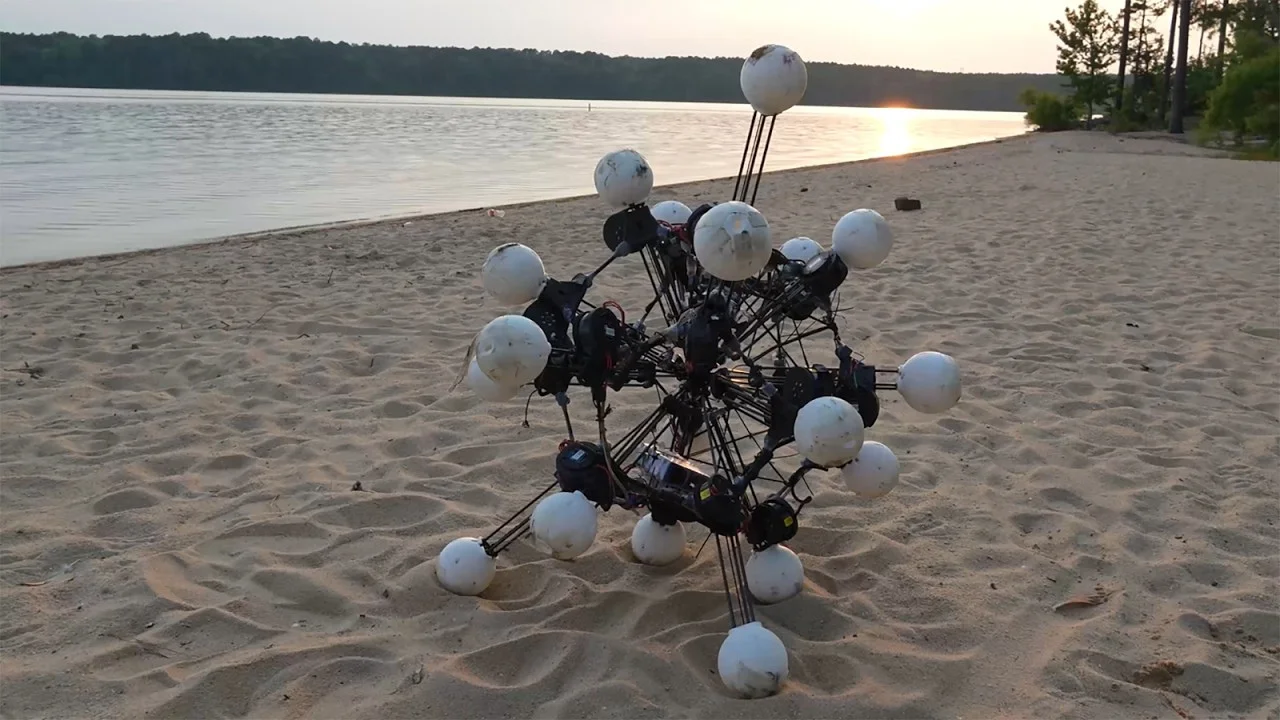

For years, scientists have looked to animals and humans for inspiration when designing robots, but a new study suggests they’ve been looking in the wrong place for the optimal robot body.
Researchers have now revealed what they believe is America’s Next Top Robot Body, and it doesn’t look anything like a person, dog, or insect.
Instead, the unusual machine has 20 legs sticking out in every direction.
And despite its bizarre appearance, the robot can climb walls, squeeze through forests, and keep moving even when parts of it break.
Why scientists think a robot with 20 legs is the future
The robot, called Argus, was created by tech researchers at Duke University who wanted to rethink how robots are designed.
Rather than copying nature, the team focused on a mathematical principle known as ‘dynamic isotropy’, which measures how effectively a machine can move in any direction.
After running more than 1,500 simulations of different robot shapes, they concluded that a symmetrical design with 20 telescoping legs offered the best balance of movement, stability, and adaptability.
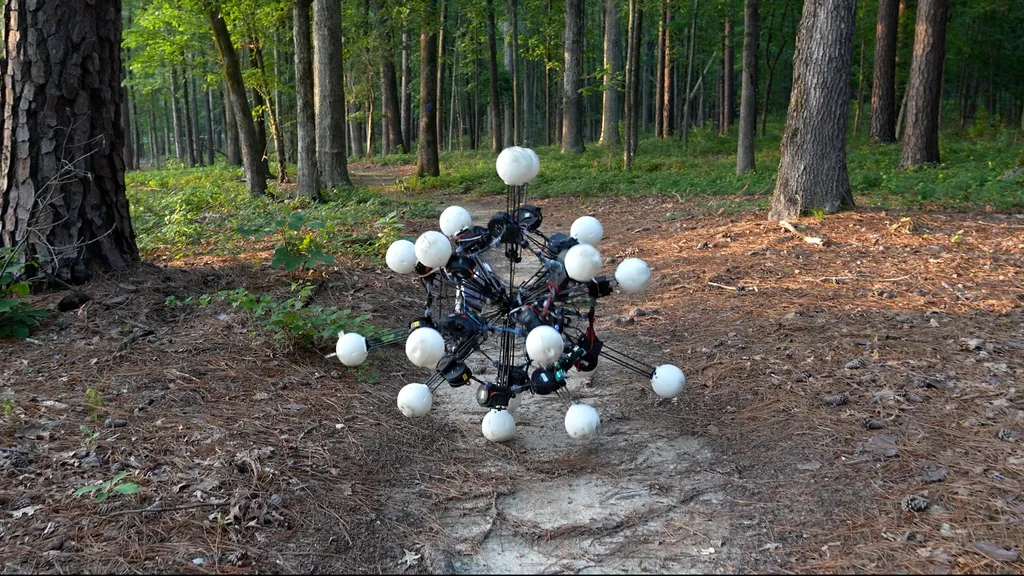
The resulting machine looks a little like a robotic sea urchin.
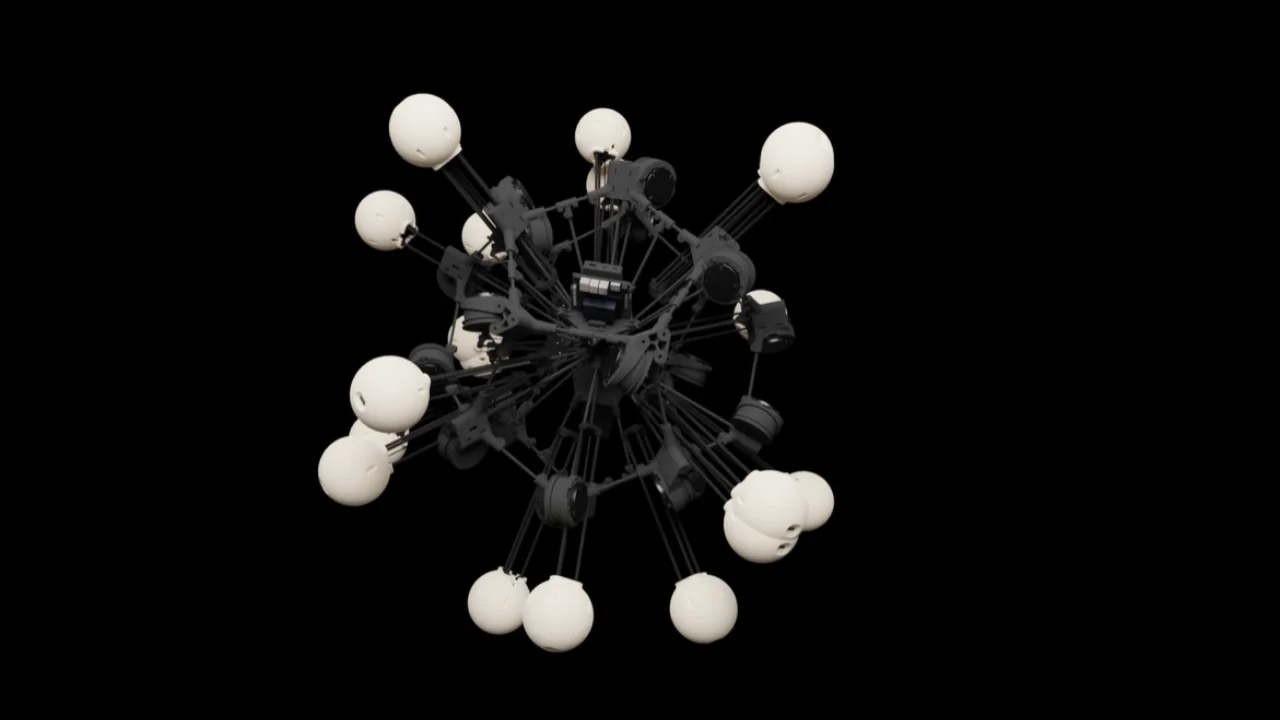
Each of its 20 legs extends from a central body and is fitted with its own depth-sensing camera, allowing Argus to see and react to its surroundings from every angle, and unlike most robots, it has no front, back, top, or bottom.
That means it doesn’t need to turn around before changing direction. It can simply move whichever way it wants instantly.
Researchers say Argus achieved a dynamic isotropy score of 0.91 out of 1, while most existing robots, including humanoid robots and drones, typically score below 0.6.
Related


The robot can climb walls, navigate forests and survive damage
The real-world demonstrations are where Argus becomes even more impressive.
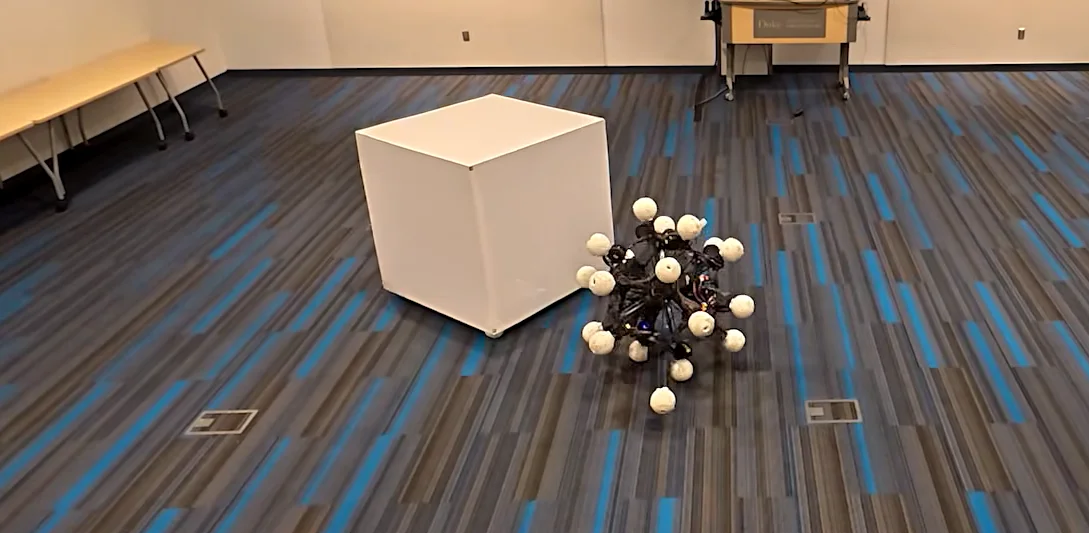
During testing, the robot successfully moved through dense woodland, rolled over obstacles, crossed rough terrain, pushed heavy loads, and even climbed between vertical walls using its legs to brace itself against both surfaces.
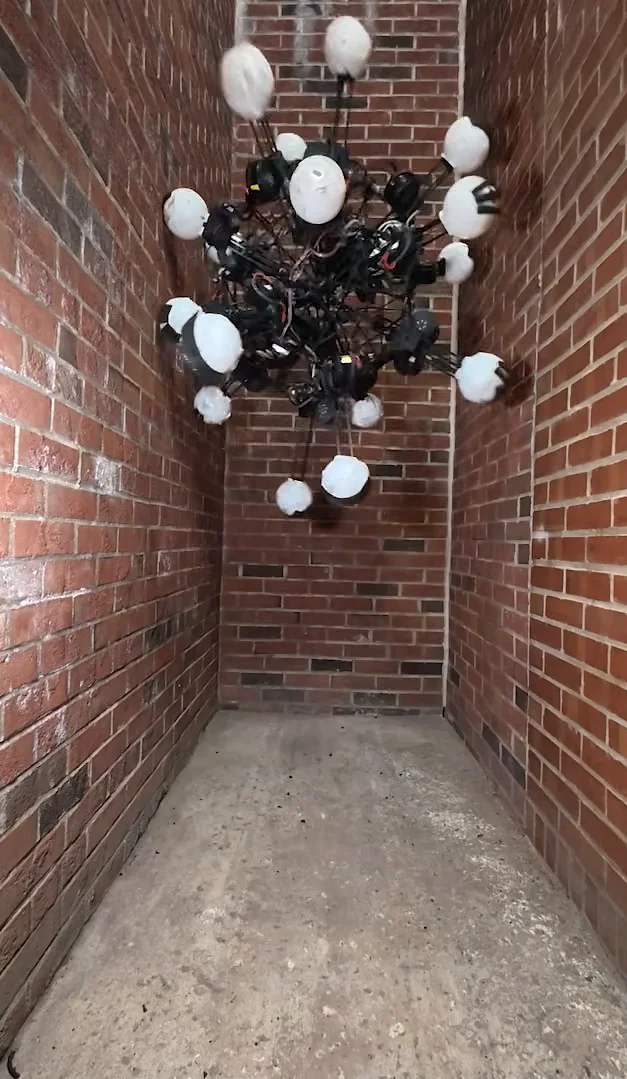
Scientists also found that the robot could continue operating even when some of its motors failed or when individual legs were damaged.
Because its movement is distributed across 20 limbs rather than relying on a small number of critical joints, it is far more resilient than many traditional robot designs.
The team believes the technology could eventually be used for search-and-rescue missions, environmental monitoring, exploring difficult terrain, and even future space exploration.

The robot’s unusual appearance has already drawn comparisons to the Matrix.
It might look like something straight out of science fiction, but researchers believe Argus and his robot body could represent a completely new way of thinking about robot design.
And if they’re right, the future of robotics may have a lot more legs than anyone expected.